0
0
0
Expressing the sense of the House of Representatives regarding United Nations General Assembly Resolution 2758 (XXVI) and the harmful conflation of China's "One China Principle" and the United States' "One China Policy".
3/15/2025, 8:05 AM
Summary of Bill HRES 148
Bill 119 HRES 148 is a resolution introduced in the House of Representatives that expresses the sense of the House regarding United Nations General Assembly Resolution 2758 (XXVI) and the conflation of China's "One China Principle" with the United States' "One China Policy."
The resolution highlights the importance of distinguishing between China's "One China Principle," which asserts that there is only one China and Taiwan is a part of it, and the United States' "One China Policy," which acknowledges Beijing as the government of China but does not take a position on the sovereignty of Taiwan.
The resolution emphasizes that the United States should continue to uphold its commitment to the Taiwan Relations Act, which provides for unofficial relations with Taiwan and supports Taiwan's security and self-defense capabilities. It also reaffirms the importance of maintaining peace and stability in the Taiwan Strait and the broader Indo-Pacific region. Overall, Bill 119 HRES 148 aims to clarify the differences between China's "One China Principle" and the United States' "One China Policy" and reaffirm the United States' support for Taiwan's security and self-defense capabilities.
The resolution highlights the importance of distinguishing between China's "One China Principle," which asserts that there is only one China and Taiwan is a part of it, and the United States' "One China Policy," which acknowledges Beijing as the government of China but does not take a position on the sovereignty of Taiwan.
The resolution emphasizes that the United States should continue to uphold its commitment to the Taiwan Relations Act, which provides for unofficial relations with Taiwan and supports Taiwan's security and self-defense capabilities. It also reaffirms the importance of maintaining peace and stability in the Taiwan Strait and the broader Indo-Pacific region. Overall, Bill 119 HRES 148 aims to clarify the differences between China's "One China Principle" and the United States' "One China Policy" and reaffirm the United States' support for Taiwan's security and self-defense capabilities.
Current Status of Bill HRES 148
Bill HRES 148 is currently in the status of Introduced to House since February 21, 2025. Bill HRES 148 was introduced during Congress 119 and was introduced to the House on February 21, 2025. Bill HRES 148's most recent activity was Referred to the House Committee on Foreign Affairs. as of February 21, 2025
Bipartisan Support of Bill HRES 148
Total Number of Sponsors
5Democrat Sponsors
0Republican Sponsors
5Unaffiliated Sponsors
0Total Number of Cosponsors
23Democrat Cosponsors
15Republican Cosponsors
8Unaffiliated Cosponsors
0Policy Area and Potential Impact of Bill HRES 148
Primary Policy Focus
Alternate Title(s) of Bill HRES 148
Expressing the sense of the House of Representatives regarding United Nations General Assembly Resolution 2758 (XXVI) and the harmful conflation of China's "One China Principle" and the United States' "One China Policy".
Expressing the sense of the House of Representatives regarding United Nations General Assembly Resolution 2758 (XXVI) and the harmful conflation of China's "One China Principle" and the United States' "One China Policy".
Comments
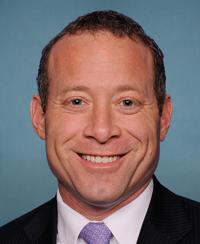
Sponsors and Cosponsors of HRES 148





Latest Bills
TRAPS Act
Bill HR 4936September 18, 2026
Apples to Apples Comparison Act of 2025
Bill HR 4093September 18, 2026
American Lending Fairness Act of 2026
Bill HR 7866September 18, 2026
Civil Investigative Demand Reform Act of 2025
Bill HR 1653September 18, 2026
American Reserve Modernization Act of 2026
Bill HR 8957September 18, 2026
Preventive Health Savings Act
Bill HR 4464September 18, 2026
PEARL Act
Bill HR 9327September 18, 2026
Medically Tailored Home-Delivered Meals Program Pilot Act
Bill HR 5439September 18, 2026
To designate the facility of the United States Postal Service located at 117 West Lovett Street in Charlotte, Michigan, as the "Francis C. Flaherty Post Office Building".
Bill HR 9570September 18, 2026
To designate the facility of the United States Postal Service located at 1019 Avenue H in Fort Madison, Iowa, as the "Martin L. Graber Post Office".
Bill HR 4707September 18, 2026