0
0
0
Prohibition on IOER Act of 2025
1/30/2025, 10:53 AM
Summary of Bill HR 146
Bill 119 HR 146, also known as the "Federal Reserve Transparency and Accountability Act," aims to amend the Federal Reserve Act by prohibiting Federal Reserve banks from paying interest on excess reserves. Excess reserves refer to funds that banks hold in excess of the required amount set by the Federal Reserve.
The bill seeks to address concerns about the Federal Reserve's monetary policy and its impact on the economy. Proponents argue that by eliminating interest payments on excess reserves, banks would be incentivized to lend out more money, stimulating economic growth and increasing liquidity in the financial system.
Opponents of the bill, however, argue that removing interest payments on excess reserves could have unintended consequences, such as destabilizing the financial system and potentially leading to inflation. They also argue that the Federal Reserve should have the flexibility to set its own monetary policy without interference from Congress. Overall, Bill 119 HR 146 raises important questions about the role of the Federal Reserve in managing the economy and the potential impact of its policies on financial institutions and the broader economy. It will be important to closely monitor the progress of this bill and the debates surrounding it in Congress.
The bill seeks to address concerns about the Federal Reserve's monetary policy and its impact on the economy. Proponents argue that by eliminating interest payments on excess reserves, banks would be incentivized to lend out more money, stimulating economic growth and increasing liquidity in the financial system.
Opponents of the bill, however, argue that removing interest payments on excess reserves could have unintended consequences, such as destabilizing the financial system and potentially leading to inflation. They also argue that the Federal Reserve should have the flexibility to set its own monetary policy without interference from Congress. Overall, Bill 119 HR 146 raises important questions about the role of the Federal Reserve in managing the economy and the potential impact of its policies on financial institutions and the broader economy. It will be important to closely monitor the progress of this bill and the debates surrounding it in Congress.
Congressional Summary of HR 146
Prohibition on IOER Act of 2025
This bill prohibits a Federal Reserve bank from paying interest to a depository institution on reserve balances in excess of minimum requirements.
Read the Full Bill
Current Status of Bill HR 146
Bill HR 146 is currently in the status of Bill Introduced since January 3, 2025. Bill HR 146 was introduced during Congress 119 and was introduced to the House on January 3, 2025. Bill HR 146's most recent activity was Referred to the House Committee on Financial Services. as of January 3, 2025
Bipartisan Support of Bill HR 146
Total Number of Sponsors
5Democrat Sponsors
0Republican Sponsors
5Unaffiliated Sponsors
0Total Number of Cosponsors
0Democrat Cosponsors
0Republican Cosponsors
0Unaffiliated Cosponsors
0Policy Area and Potential Impact of Bill HR 146
Primary Policy Focus
Alternate Title(s) of Bill HR 146
To amend the Federal Reserve Act to prohibit Federal reserve banks from paying interest on excess reserves.
To amend the Federal Reserve Act to prohibit Federal reserve banks from paying interest on excess reserves.
Comments
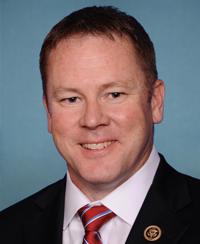
Sponsors and Cosponsors of HR 146
Latest Bills
TRAPS Act
Bill HR 4936September 18, 2026
Apples to Apples Comparison Act of 2025
Bill HR 4093September 18, 2026
American Lending Fairness Act of 2026
Bill HR 7866September 18, 2026
Civil Investigative Demand Reform Act of 2025
Bill HR 1653September 18, 2026
American Reserve Modernization Act of 2026
Bill HR 8957September 18, 2026
Preventive Health Savings Act
Bill HR 4464September 18, 2026
PEARL Act
Bill HR 9327September 18, 2026
Medically Tailored Home-Delivered Meals Program Pilot Act
Bill HR 5439September 18, 2026
To designate the facility of the United States Postal Service located at 117 West Lovett Street in Charlotte, Michigan, as the "Francis C. Flaherty Post Office Building".
Bill HR 9570September 18, 2026
To designate the facility of the United States Postal Service located at 1019 Avenue H in Fort Madison, Iowa, as the "Martin L. Graber Post Office".
Bill HR 4707September 18, 2026