0
0
0
A joint resolution providing for congressional disapproval under chapter 8 of title 5, United States Code, of the rule submitted by the National Labor Relations Board relating to a "Standard for Determining Joint Employer Status".
12/15/2023, 4:05 PM
Summary of Bill SJRES 49
Bill 118 SJRes 49 is a joint resolution that aims to disapprove of a rule submitted by the National Labor Relations Board (NLRB) regarding the "Standard for Determining Joint Employer Status." The rule in question pertains to how joint employer status is determined in labor relations.
The resolution falls under chapter 8 of title 5 of the United States Code, which allows Congress to review and potentially overturn regulations issued by federal agencies. In this case, the NLRB's rule on joint employer status is being challenged by Congress.
The concept of joint employer status is important in labor relations because it determines which entities are responsible for complying with labor laws and regulations. When two or more employers share control over the same employees, they may be considered joint employers and both held accountable for labor violations. The resolution seeks to disapprove of the NLRB's rule on joint employer status, indicating that Congress does not agree with the way the rule was formulated or its potential impact on labor relations. By passing this resolution, Congress would effectively nullify the NLRB's rule and prevent it from being implemented. Overall, Bill 118 SJRes 49 is a significant piece of legislation that addresses an important aspect of labor relations and demonstrates Congress's oversight of federal agency regulations.
The resolution falls under chapter 8 of title 5 of the United States Code, which allows Congress to review and potentially overturn regulations issued by federal agencies. In this case, the NLRB's rule on joint employer status is being challenged by Congress.
The concept of joint employer status is important in labor relations because it determines which entities are responsible for complying with labor laws and regulations. When two or more employers share control over the same employees, they may be considered joint employers and both held accountable for labor violations. The resolution seeks to disapprove of the NLRB's rule on joint employer status, indicating that Congress does not agree with the way the rule was formulated or its potential impact on labor relations. By passing this resolution, Congress would effectively nullify the NLRB's rule and prevent it from being implemented. Overall, Bill 118 SJRes 49 is a significant piece of legislation that addresses an important aspect of labor relations and demonstrates Congress's oversight of federal agency regulations.
Read the Full Bill
Current Status of Bill SJRES 49
Bill SJRES 49 is currently in the status of Bill Introduced since November 9, 2023. Bill SJRES 49 was introduced during Congress 118 and was introduced to the Senate on November 9, 2023. Bill SJRES 49's most recent activity was Read twice and referred to the Committee on Health, Education, Labor, and Pensions. as of November 9, 2023
Bipartisan Support of Bill SJRES 49
Total Number of Sponsors
1Democrat Sponsors
0Republican Sponsors
1Unaffiliated Sponsors
0Total Number of Cosponsors
78Democrat Cosponsors
2Republican Cosponsors
76Unaffiliated Cosponsors
0Policy Area and Potential Impact of Bill SJRES 49
Primary Policy Focus
Labor and EmploymentAlternate Title(s) of Bill SJRES 49
A joint resolution providing for congressional disapproval under chapter 8 of title 5, United States Code, of the rule submitted by the National Labor Relations Board relating to a "Standard for Determining Joint Employer Status".
A joint resolution providing for congressional disapproval under chapter 8 of title 5, United States Code, of the rule submitted by the National Labor Relations Board relating to a "Standard for Determining Joint Employer Status".
Comments
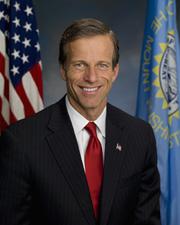
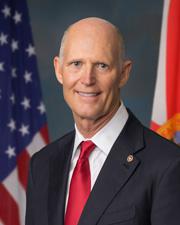
Sponsors and Cosponsors of SJRES 49




Latest Bills
TRAPS Act
Bill HR 4936September 18, 2026
Apples to Apples Comparison Act of 2025
Bill HR 4093September 18, 2026
American Lending Fairness Act of 2026
Bill HR 7866September 18, 2026
Civil Investigative Demand Reform Act of 2025
Bill HR 1653September 18, 2026
American Reserve Modernization Act of 2026
Bill HR 8957September 18, 2026
Preventive Health Savings Act
Bill HR 4464September 18, 2026
PEARL Act
Bill HR 9327September 18, 2026
Medically Tailored Home-Delivered Meals Program Pilot Act
Bill HR 5439September 18, 2026
To designate the facility of the United States Postal Service located at 117 West Lovett Street in Charlotte, Michigan, as the "Francis C. Flaherty Post Office Building".
Bill HR 9570September 18, 2026
To designate the facility of the United States Postal Service located at 1019 Avenue H in Fort Madison, Iowa, as the "Martin L. Graber Post Office".
Bill HR 4707September 18, 2026
Providing for congressional disapproval under chapter 8 of title 5, United States Code, of the rule submitted by the National Labor Relations Board relating to "Standard for Determining Joint Employer Status".
Bill HJRES 98May 9, 2024