0
0
0
Anti-Congestion Tax Act
12/15/2023, 3:53 PM
Summary of Bill HR 422
Bill 118 hr 422, also known as the Anti-Congestion Tax Act, is a piece of legislation introduced in the US Congress aimed at prohibiting the implementation of congestion pricing in certain areas. Congestion pricing is a strategy used by some cities to reduce traffic congestion by charging drivers a fee to enter certain high-traffic areas during peak hours.
The bill specifically targets cities that receive federal funding for transportation projects, prohibiting them from using any of that funding to implement congestion pricing schemes. Supporters of the bill argue that congestion pricing unfairly burdens low-income individuals who may not have the option to avoid driving during peak hours, while opponents argue that congestion pricing is an effective way to reduce traffic congestion and encourage the use of public transportation.
If passed, the Anti-Congestion Tax Act would have significant implications for cities looking to implement congestion pricing as a way to address traffic congestion and reduce emissions. The bill is currently being debated in Congress, with both supporters and opponents making their case for or against its passage.
The bill specifically targets cities that receive federal funding for transportation projects, prohibiting them from using any of that funding to implement congestion pricing schemes. Supporters of the bill argue that congestion pricing unfairly burdens low-income individuals who may not have the option to avoid driving during peak hours, while opponents argue that congestion pricing is an effective way to reduce traffic congestion and encourage the use of public transportation.
If passed, the Anti-Congestion Tax Act would have significant implications for cities looking to implement congestion pricing as a way to address traffic congestion and reduce emissions. The bill is currently being debated in Congress, with both supporters and opponents making their case for or against its passage.
Congressional Summary of HR 422
Anti-Congestion Tax Act
This bill prohibits the Department of Transportation (DOT) from awarding capital investment grants to the Metropolitan Transportation Authority for projects in New York until DOT certifies that drivers using certain vehicular crossings (e.g., Holland Tunnel, Lincoln Tunnel, or George Washington Bridge) to enter into Manhattan receive exemptions from congestion fees.
Drivers entering Manhattan using any of the crossings receive a federal tax credit at the end of the year equal to the amount paid in congestion fees.
Read the Full Bill
Current Status of Bill HR 422
Bill HR 422 is currently in the status of Bill Introduced since January 20, 2023. Bill HR 422 was introduced during Congress 118 and was introduced to the House on January 20, 2023. Bill HR 422's most recent activity was Referred to the Subcommittee on Highways and Transit. as of February 1, 2023
Bipartisan Support of Bill HR 422
Total Number of Sponsors
1Democrat Sponsors
1Republican Sponsors
0Unaffiliated Sponsors
0Total Number of Cosponsors
4Democrat Cosponsors
0Republican Cosponsors
4Unaffiliated Cosponsors
0Policy Area and Potential Impact of Bill HR 422
Primary Policy Focus
Transportation and Public WorksPotential Impact Areas
- Income tax credits
- Motor vehicles
- New Jersey
- New York City
- New York State
- Roads and highways
- Tax administration and collection, taxpayers
- Transportation costs
- User charges and fees
Alternate Title(s) of Bill HR 422
Anti-Congestion Tax Act
Anti-Congestion Tax Act
To condition the receipt of certain grants by the Metropolitan Transportation Authority on exempting certain drivers from congestion fees, and for other purposes.
Comments
Sponsors and Cosponsors of HR 422
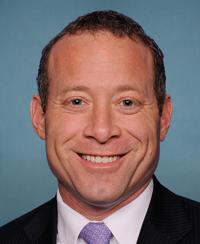
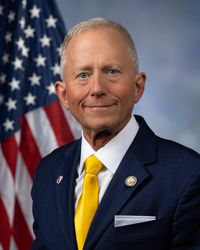
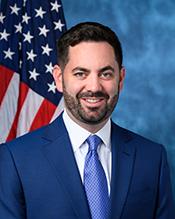
Latest Bills
TRAPS Act
Bill HR 4936September 18, 2026
Apples to Apples Comparison Act of 2025
Bill HR 4093September 18, 2026
American Lending Fairness Act of 2026
Bill HR 7866September 18, 2026
Civil Investigative Demand Reform Act of 2025
Bill HR 1653September 18, 2026
American Reserve Modernization Act of 2026
Bill HR 8957September 18, 2026
Preventive Health Savings Act
Bill HR 4464September 18, 2026
PEARL Act
Bill HR 9327September 18, 2026
Medically Tailored Home-Delivered Meals Program Pilot Act
Bill HR 5439September 18, 2026
To designate the facility of the United States Postal Service located at 117 West Lovett Street in Charlotte, Michigan, as the "Francis C. Flaherty Post Office Building".
Bill HR 9570September 18, 2026
To designate the facility of the United States Postal Service located at 1019 Avenue H in Fort Madison, Iowa, as the "Martin L. Graber Post Office".
Bill HR 4707September 18, 2026