0
0

Employee Rights Act

12/12/2023, 8:15 AM

Summary of Bill HR 2700

Bill 118 hr 2700, also known as the Employee Rights Act, is a piece of legislation currently being considered in the US Congress. The main purpose of this bill is to protect the rights of employees in the workplace.

One of the key provisions of the Employee Rights Act is the requirement for employers to provide employees with clear and accurate information about their rights and responsibilities. This includes information about wages, benefits, and working conditions. The bill also aims to strengthen protections for whistleblowers who report illegal or unethical behavior in the workplace.

Additionally, the Employee Rights Act includes provisions to protect employees from discrimination and harassment based on factors such as race, gender, religion, or sexual orientation. The bill also seeks to improve workplace safety by requiring employers to provide adequate training and resources to prevent accidents and injuries. Overall, the Employee Rights Act is designed to ensure that employees are treated fairly and respectfully in the workplace. It aims to create a more transparent and equitable working environment for all workers, regardless of their background or position.

Congressional Summary of HR 2700

Employee Rights Act

This bill generally addresses employer obligations related to unionized workplaces.

This bill provides that an employer may be considered a joint employer in relation to an employee under federal labor law only if such employer directly, actually, and immediately (and not in a limited and routine manner) exercises significant control over the essential terms and conditions of employment. Such control may by demonstrated by hiring and discharging employees, determining individual employee rates of pay and benefits, day-to-day supervision of employees, assigning individual work schedules, positions, and tasks, and administering employee discipline.

The bill also requires a workplace election to approve or reject a union to be conducted by secret ballot. Further, the bill requires an employer to provide limited employee information to union representatives to facilitate a workplace election. An employer that mishandles or fails to provide such information according to the bill's requirements may be liable for an unfair labor practice (i.e., labor law violation).

Additionally, the bill requires an employee to authorize in writing any use of the employee's labor organization dues or other contribution for a purpose other than collective bargaining or contract administration. Such authorization must be made upon 35 days' notice and expires after one year.

Finally, the bill exempts Indian Tribes, including Indian Tribe enterprises and institutions, from the collective bargaining rights and related provisions of federal labor law.

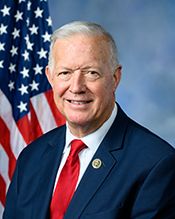
Current Status of Bill HR 2700

Bill HR 2700 is currently in the status of Bill Introduced since April 28, 2023. Bill HR 2700 was introduced during Congress 118 and was introduced to the House on April 19, 2023.  Bill HR 2700's most recent activity was Sponsor introductory remarks on measure. (CR H2104) as of April 28, 2023

Bipartisan Support of Bill HR 2700

Total Number of Sponsors
1
Democrat Sponsors
0
Republican Sponsors
1
Unaffiliated Sponsors
0
Total Number of Cosponsors
114
Democrat Cosponsors
0
Republican Cosponsors
114
Unaffiliated Cosponsors
0

Policy Area and Potential Impact of Bill HR 2700

Primary Policy Focus

Labor and Employment

Alternate Title(s) of Bill HR 2700

Employee Rights Act
Employee Rights Act
To reform the labor laws of the United States, and for other purposes.

Comments

Latest Bills

Veterans 2nd Amendment Protection Act
Bill HR 1041May 20, 2026
Providing for consideration of the bill (H.R. 1041) to amend title 38, United States Code, to prohibit the Secretary of Veterans Affairs from transmitting certain information to the Department of Justice for use by the national instant criminal background check system; providing for consideration of the bill (H.R. 6047) to amend title 38, United States Code, to direct the Secretary of Veterans Affairs to increase the dollar amounts for the payment of certain disability compensation and dependency and indemnity compensation under the laws administered by the Secretary; providing for consideration of the bill (H.R. 1329) to permit the Smithsonian American Women's History Museum to be located within the Reserve of the National Mall, and for other purposes; and waiving a requirement of clause 6(a) of rule XIII with respect to consideration of certain resolutions reported from the Committee on Rules.
Bill HRES 1300May 20, 2026
Sharri Briley and Eric Edmundson Veterans Benefits Expansion Act of 2026
Bill HR 6047May 20, 2026
Smithsonian American Women’s History Museum Act
Bill HR 1329May 20, 2026
A concurrent resolution setting forth the congressional budget for the United States Government for fiscal year 2026 and setting forth the appropriate budgetary levels for fiscal years 2027 through 2035.
Bill SCONRES 33May 20, 2026
CONNECT Act
Bill HR 7995May 20, 2026
Foster Youth Housing Opportunity Act
Bill HR 7432May 20, 2026
Review Every Veterans Claim Act of 2025
Bill HR 2137May 20, 2026
Foster Youth Workforce Opportunity Act
Bill HR 7343May 20, 2026
Foster Youth Postsecondary Education Access and Success Act
Bill HR 7463May 20, 2026
Tribal Labor Sovereignty Act of 2023
Bill S 1328December 15, 2023
Save Local Business Act
Bill S 1261March 13, 2024
Employee Rights Act
Bill S 1201March 12, 2024
Save Local Business Act
Bill HR 2826January 31, 2024