0
0
0
Fire Ready Nation Act of 2022
12/29/2022, 6:18 PM
Summary of Bill HR 8449
The Fire Ready Nation Act of 2022, also known as Bill 117 hr 8449, is a piece of legislation currently being considered by the US Congress. The main goal of this bill is to improve the nation's readiness and response to wildfires.
The bill includes provisions for increasing funding for wildfire prevention and suppression efforts, as well as for improving coordination between federal, state, and local agencies in responding to wildfires. It also calls for the development of a national strategy for wildfire management, with a focus on reducing the risk of catastrophic wildfires and protecting communities at risk.
Additionally, the Fire Ready Nation Act of 2022 includes measures to improve the training and resources available to firefighters and other first responders, as well as to enhance public education and awareness about wildfire risks. The bill also addresses the need for better data collection and research on wildfires, in order to improve our understanding of these natural disasters and how to effectively respond to them. Overall, the Fire Ready Nation Act of 2022 aims to strengthen the nation's ability to prevent, prepare for, and respond to wildfires, in order to better protect lives, property, and natural resources.
The bill includes provisions for increasing funding for wildfire prevention and suppression efforts, as well as for improving coordination between federal, state, and local agencies in responding to wildfires. It also calls for the development of a national strategy for wildfire management, with a focus on reducing the risk of catastrophic wildfires and protecting communities at risk.
Additionally, the Fire Ready Nation Act of 2022 includes measures to improve the training and resources available to firefighters and other first responders, as well as to enhance public education and awareness about wildfire risks. The bill also addresses the need for better data collection and research on wildfires, in order to improve our understanding of these natural disasters and how to effectively respond to them. Overall, the Fire Ready Nation Act of 2022 aims to strengthen the nation's ability to prevent, prepare for, and respond to wildfires, in order to better protect lives, property, and natural resources.
Congressional Summary of HR 8449
Fire Ready Nation Act of 2022
This bill establishes fire weather programs and activities to improve fire forecasting and readiness.
The National Oceanic and Atmospheric Administration (NOAA) shall
- establish a coordinated fire weather services program within NOAA to support readiness, responsiveness, and overall resilience of the United States to wildfires, fire weather, smoke, and other associated conditions, hazards, and impacts in built and natural environments (including at the wildland-urban interface);
- develop a comprehensive, centralized, and publicly accessible digital presence designed to promote usability of the services, tools, data, and information produced by the program;
- develop services that provide public access to digital fire weather data and information;
- seek to acquire sufficient high-performance computing resources and capacity for research, operations, and data storage in support of the program;
- establish a fire weather testbed to evaluate the accuracy and usability of technology, models, fire weather products and services, and other research to accelerate the implementation and use of new capabilities by NOAA, federal and land management agencies, and other relevant stakeholders;
- conduct annual post-fire-weather season surveys and assessments;
- establish an Incident Meteorologist Service within the National Weather Service (NWS);
- assess resources, personnel, procedures, and activities necessary to maximize the functionality and utility of the automated surface observing system and implement a plan that addresses the findings of the assessment; and
- conduct a workforce support services assessment of NWS employees engaged in emergency response.
Read the Full Bill
Current Status of Bill HR 8449
Bill HR 8449 is currently in the status of Bill Introduced since July 29, 2022. Bill HR 8449 was introduced during Congress 117 and was introduced to the House on July 20, 2022. Bill HR 8449's most recent activity was Sponsor introductory remarks on measure. (CR H7489) as of July 29, 2022
Bipartisan Support of Bill HR 8449
Total Number of Sponsors
1Democrat Sponsors
1Republican Sponsors
0Unaffiliated Sponsors
0Total Number of Cosponsors
2Democrat Cosponsors
2Republican Cosponsors
0Unaffiliated Cosponsors
0Policy Area and Potential Impact of Bill HR 8449
Primary Policy Focus
Science, Technology, CommunicationsAlternate Title(s) of Bill HR 8449
Fire Ready Nation Act of 2022
Fire Ready Nation Act of 2022
To establish and maintain a coordinated program within the National Oceanic and Atmospheric Administration that improves wildfire, fire weather, fire risk, and smoke related forecasting, detection, modeling, observations, and service delivery, and to address growing needs in the wildland-urban interface, and for other purposes.
Comments
Sponsors and Cosponsors of HR 8449
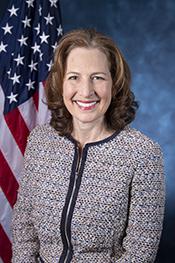
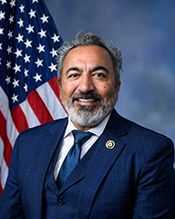
Latest Bills
TRAPS Act
Bill HR 4936September 18, 2026
Apples to Apples Comparison Act of 2025
Bill HR 4093September 18, 2026
American Lending Fairness Act of 2026
Bill HR 7866September 18, 2026
Civil Investigative Demand Reform Act of 2025
Bill HR 1653September 18, 2026
American Reserve Modernization Act of 2026
Bill HR 8957September 18, 2026
Preventive Health Savings Act
Bill HR 4464September 18, 2026
PEARL Act
Bill HR 9327September 18, 2026
Medically Tailored Home-Delivered Meals Program Pilot Act
Bill HR 5439September 18, 2026
To designate the facility of the United States Postal Service located at 117 West Lovett Street in Charlotte, Michigan, as the "Francis C. Flaherty Post Office Building".
Bill HR 9570September 18, 2026
To designate the facility of the United States Postal Service located at 1019 Avenue H in Fort Madison, Iowa, as the "Martin L. Graber Post Office".
Bill HR 4707September 18, 2026
Fire Ready Nation Act of 2022
Bill S 4237March 13, 2024