0
0

To require the Federal Communications Commission to auction spectrum in the band between 1.3 gigahertz and 13.2 gigahertz, and for other purposes.

1/29/2025, 9:05 AM

Summary of Bill HR 651

Bill 119 HR 651, also known as the "Spectrum Auction Act," is a piece of legislation that aims to require the Federal Communications Commission (FCC) to auction off spectrum in the band between 1.3 gigahertz and 13.2 gigahertz. This spectrum is valuable for telecommunications companies as it can be used for a variety of purposes, including expanding wireless networks and improving internet connectivity.

The bill is designed to promote competition in the telecommunications industry by making more spectrum available for auction, allowing smaller companies to acquire the necessary resources to compete with larger corporations. By auctioning off this spectrum, the government can also generate revenue that can be used for other purposes.

In addition to requiring the FCC to auction off the specified spectrum, the bill also includes provisions for ensuring that the auction process is fair and transparent. This includes guidelines for how the spectrum should be allocated and rules for preventing anti-competitive behavior. Overall, the Spectrum Auction Act aims to promote innovation and competition in the telecommunications industry by making more spectrum available for auction. It also seeks to generate revenue for the government through the auction process.

Congressional Summary of HR 651

Spectrum Pipeline Act of 2025

This bill renews the authority of the Federal Communications Commission (FCC) to auction licenses for the use of radio frequency spectrum, and requires some frequencies currently used by the federal government to be reallocated to permit use by private entities.

Specifically, the bill reauthorizes the FCC’s use of competitive bidding (i.e., auctions) to grant licenses for the use of specific frequencies. (The FCC’s auction authority must be renewed by Congress periodically. It expired on March 9, 2023, and has not been renewed.)

Further, the bill directs the National Telecommunications and Information Administration to identify frequencies currently designated for use by the federal government that may be reallocated to permit use by private entities either exclusively or on a shared basis. At least half of the spectrum identified for reallocation must be allocated to commercial use (including commercial wireless use), and licenses in this category must be auctioned by the FCC within a specified time frame.

A separate portion of the spectrum must be allocated to unlicensed use. (Unlicensed frequencies are commonly used to support Wi-Fi, connected appliances, wearable consumer devices, and other electronics.) 

The bill also makes certain changes to the process for compensating federal entities that relocate to new frequencies under a spectrum reallocation plan. The bill shortens the time frame for congressional review of payments to these entities, and permits such payments to be used to cover the cost of replacing existing systems and equipment with state-of-the-art upgrades.

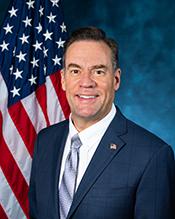
Current Status of Bill HR 651

Bill HR 651 is currently in the status of Bill Introduced since January 23, 2025. Bill HR 651 was introduced during Congress 119 and was introduced to the House on January 23, 2025.  Bill HR 651's most recent activity was Referred to the House Committee on Energy and Commerce. as of January 23, 2025

Bipartisan Support of Bill HR 651

Total Number of Sponsors
1
Democrat Sponsors
0
Republican Sponsors
1
Unaffiliated Sponsors
0
Total Number of Cosponsors
1
Democrat Cosponsors
0
Republican Cosponsors
1
Unaffiliated Cosponsors
0

Policy Area and Potential Impact of Bill HR 651

Primary Policy Focus

Alternate Title(s) of Bill HR 651

To require the Federal Communications Commission to auction spectrum in the band between 1.3 gigahertz and 13.2 gigahertz, and for other purposes.

Comments

Latest Bills

Ending Importation of Russian Oil Act
Bill HR 6968March 11, 2026
HONOR Act
Bill S 327March 11, 2026
Making further consolidated appropriations for the fiscal year ending September 30, 2026, and for other purposes.
Bill HR 7147March 11, 2026
A bill to prohibit the Department of Homeland Security from constructing, acquiring, renovating, or operating any new processing site or detention center without providing a mechanism for public comments regarding such activity, entering into a signed, written agreement with appropriate State and local officials, and providing Congress with advance notice of such activity.
Bill S 3894March 11, 2026
A bill to amend title 10, United States Code, to authorize representatives of veterans service organizations to participate in presentations to promote certain benefits available to veterans during preseparation counseling under the Transition Assistance Program of the Department of Defense, and for other purposes.
Bill S 3938March 11, 2026
A bill to amend the Elementary and Secondary Education Act of 1965 to expand access to school-wide arts and music programs, and for other purposes.
Bill S 4018March 11, 2026
A bill to allow States to require payment of State fees related to boating as a condition for issuance of a vessel number and to collect such fees in conjunction with other fees related to vessel numbering.
Bill S 3985March 11, 2026
A bill to restore competition in the meatpacking industry by reducing excessive concentration and market power and ultimately reduce prices for American consumers, and for other purposes.
Bill S 4007March 11, 2026
A resolution requesting information on the Republic of Guatemala's human rights practices pursuant to section 502B(c) of the Foreign Assistance Act of 1961.
Bill SRES 636March 11, 2026
A bill to amend the Internal Revenue Code of 1986 to increase the standard deduction, and for other purposes.
Bill S 4042March 11, 2026