0
0
0
To amend title II of the Social Security Act to means-test certain child's insurance benefits.
1/22/2025, 9:20 AM
Summary of Bill HR 571
Bill 119 HR 571, also known as the Means-Testing Child's Insurance Benefits Act, aims to make changes to title II of the Social Security Act. The bill proposes means-testing certain child's insurance benefits, which would involve evaluating the financial need of the child or their family before determining eligibility for benefits.
Under the current system, child's insurance benefits are provided to children of deceased, disabled, or retired workers who are eligible for Social Security benefits. These benefits are typically paid until the child reaches the age of 18, or 19 if they are still in high school.
The proposed legislation would require families to undergo a means test to determine if they meet certain income or asset thresholds in order to qualify for these benefits. This means that families with higher incomes or assets may no longer be eligible for child's insurance benefits, while those with lower incomes or assets would still receive the benefits. Proponents of the bill argue that means-testing child's insurance benefits would ensure that the limited resources of the Social Security program are directed towards those who are most in need. They believe that this would help to sustain the program for future generations and prevent it from becoming financially unsustainable. Opponents of the bill, however, argue that means-testing could potentially harm families who may have moderate incomes but still rely on these benefits to support their children. They believe that the current system, which provides benefits to all eligible children regardless of their family's financial situation, is more equitable and ensures that all children have access to the support they need. Overall, Bill 119 HR 571 represents a significant proposed change to the Social Security Act, specifically in regards to child's insurance benefits. The outcome of this legislation could have far-reaching implications for families who rely on these benefits to support their children, and it will be important to closely monitor the debate and potential impacts of this bill as it progresses through Congress.
Under the current system, child's insurance benefits are provided to children of deceased, disabled, or retired workers who are eligible for Social Security benefits. These benefits are typically paid until the child reaches the age of 18, or 19 if they are still in high school.
The proposed legislation would require families to undergo a means test to determine if they meet certain income or asset thresholds in order to qualify for these benefits. This means that families with higher incomes or assets may no longer be eligible for child's insurance benefits, while those with lower incomes or assets would still receive the benefits. Proponents of the bill argue that means-testing child's insurance benefits would ensure that the limited resources of the Social Security program are directed towards those who are most in need. They believe that this would help to sustain the program for future generations and prevent it from becoming financially unsustainable. Opponents of the bill, however, argue that means-testing could potentially harm families who may have moderate incomes but still rely on these benefits to support their children. They believe that the current system, which provides benefits to all eligible children regardless of their family's financial situation, is more equitable and ensures that all children have access to the support they need. Overall, Bill 119 HR 571 represents a significant proposed change to the Social Security Act, specifically in regards to child's insurance benefits. The outcome of this legislation could have far-reaching implications for families who rely on these benefits to support their children, and it will be important to closely monitor the debate and potential impacts of this bill as it progresses through Congress.
Congressional Summary of HR 571
This bill implements a means test for certain elementary and secondary school students aged 18 or older to collect Social Security child’s benefits.
Specifically, a child beneficiary aged 18 years or older may not be eligible for Social Security child’s benefits based on their status as a full-time elementary or secondary school student if the individual on whose wages and income the benefit is based (e.g., the child’s parent or guardian) (1) is entitled to Social Security benefits, (2) is 67 years of age or older, and (3) has more than $125,000 of annual earnings for the taxable year.
Current Status of Bill HR 571
Bill HR 571 is currently in the status of Bill Introduced since January 21, 2025. Bill HR 571 was introduced during Congress 119 and was introduced to the House on January 21, 2025. Bill HR 571's most recent activity was Referred to the House Committee on Ways and Means. as of January 21, 2025
Bipartisan Support of Bill HR 571
Total Number of Sponsors
1Democrat Sponsors
0Republican Sponsors
1Unaffiliated Sponsors
0Total Number of Cosponsors
0Democrat Cosponsors
0Republican Cosponsors
0Unaffiliated Cosponsors
0Policy Area and Potential Impact of Bill HR 571
Primary Policy Focus
Alternate Title(s) of Bill HR 571
To amend title II of the Social Security Act to means-test certain child's insurance benefits.
To amend title II of the Social Security Act to means-test certain child's insurance benefits.
Comments
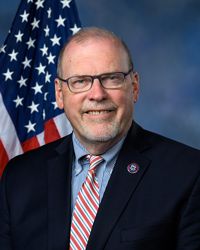
Sponsors and Cosponsors of HR 571
Latest Bills
TRAPS Act
Bill HR 4936September 18, 2026
Apples to Apples Comparison Act of 2025
Bill HR 4093September 18, 2026
American Lending Fairness Act of 2026
Bill HR 7866September 18, 2026
Civil Investigative Demand Reform Act of 2025
Bill HR 1653September 18, 2026
American Reserve Modernization Act of 2026
Bill HR 8957September 18, 2026
Preventive Health Savings Act
Bill HR 4464September 18, 2026
PEARL Act
Bill HR 9327September 18, 2026
Medically Tailored Home-Delivered Meals Program Pilot Act
Bill HR 5439September 18, 2026
To designate the facility of the United States Postal Service located at 117 West Lovett Street in Charlotte, Michigan, as the "Francis C. Flaherty Post Office Building".
Bill HR 9570September 18, 2026
To designate the facility of the United States Postal Service located at 1019 Avenue H in Fort Madison, Iowa, as the "Martin L. Graber Post Office".
Bill HR 4707September 18, 2026