0
0
0
Ending China’s Unfair Advantage Act of 2025
3/29/2025, 6:38 AM
Summary of Bill HR 2115
Bill 119 hr 2115 aims to stop the funding for two international agreements, the Montreal Protocol on Substances that Deplete the Ozone Layer and the United Nations Framework Convention on Climate Change, until China is no longer classified as a developing country. The bill argues that China, as one of the world's largest economies and greenhouse gas emitters, should no longer receive the benefits and exemptions given to developing countries under these agreements.
The Montreal Protocol, established in 1987, aims to phase out the use of substances that deplete the ozone layer, such as chlorofluorocarbons (CFCs). The United Nations Framework Convention on Climate Change, established in 1992, sets out a framework for international cooperation to combat climate change.
The bill's supporters argue that China's status as a developing country gives it an unfair advantage in these agreements, allowing it to continue using ozone-depleting substances and emitting high levels of greenhouse gases. They believe that China should be held to the same standards as other developed countries in terms of environmental protection. Critics of the bill argue that cutting off funding for these agreements could hinder global efforts to protect the ozone layer and combat climate change. They also point out that China still faces significant challenges in terms of poverty and development, despite its economic growth. Overall, Bill 119 hr 2115 raises important questions about the classification of countries in international agreements and the responsibilities of major economies like China in addressing environmental issues. It will be interesting to see how this bill progresses through Congress and what impact it may have on global environmental efforts.
The Montreal Protocol, established in 1987, aims to phase out the use of substances that deplete the ozone layer, such as chlorofluorocarbons (CFCs). The United Nations Framework Convention on Climate Change, established in 1992, sets out a framework for international cooperation to combat climate change.
The bill's supporters argue that China's status as a developing country gives it an unfair advantage in these agreements, allowing it to continue using ozone-depleting substances and emitting high levels of greenhouse gases. They believe that China should be held to the same standards as other developed countries in terms of environmental protection. Critics of the bill argue that cutting off funding for these agreements could hinder global efforts to protect the ozone layer and combat climate change. They also point out that China still faces significant challenges in terms of poverty and development, despite its economic growth. Overall, Bill 119 hr 2115 raises important questions about the classification of countries in international agreements and the responsibilities of major economies like China in addressing environmental issues. It will be interesting to see how this bill progresses through Congress and what impact it may have on global environmental efforts.
Read the Full Bill
Current Status of Bill HR 2115
Bill HR 2115 is currently in the status of Bill Introduced since March 14, 2025. Bill HR 2115 was introduced during Congress 119 and was introduced to the House on March 14, 2025. Bill HR 2115's most recent activity was Referred to the Committee on Foreign Affairs, and in addition to the Committee on Energy and Commerce, for a period to be subsequently determined by the Speaker, in each case for consideration of such provisions as fall within the jurisdiction of the committee concerned. as of March 14, 2025
Bipartisan Support of Bill HR 2115
Total Number of Sponsors
2Democrat Sponsors
0Republican Sponsors
2Unaffiliated Sponsors
0Total Number of Cosponsors
2Democrat Cosponsors
0Republican Cosponsors
2Unaffiliated Cosponsors
0Policy Area and Potential Impact of Bill HR 2115
Primary Policy Focus
Alternate Title(s) of Bill HR 2115
To prohibit funding for the Montreal Protocol on Substances that Deplete the Ozone Layer and the United Nations Framework Convention on Climate Change until China is no longer defined as a developing country.
To prohibit funding for the Montreal Protocol on Substances that Deplete the Ozone Layer and the United Nations Framework Convention on Climate Change until China is no longer defined as a developing country.
Comments
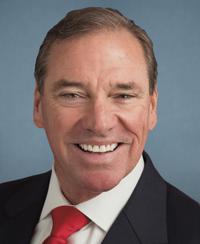
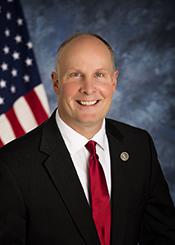
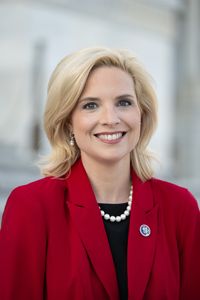
Sponsors and Cosponsors of HR 2115
Latest Bills
TRAPS Act
Bill HR 4936September 18, 2026
Apples to Apples Comparison Act of 2025
Bill HR 4093September 18, 2026
American Lending Fairness Act of 2026
Bill HR 7866September 18, 2026
Civil Investigative Demand Reform Act of 2025
Bill HR 1653September 18, 2026
American Reserve Modernization Act of 2026
Bill HR 8957September 18, 2026
Preventive Health Savings Act
Bill HR 4464September 18, 2026
PEARL Act
Bill HR 9327September 18, 2026
Medically Tailored Home-Delivered Meals Program Pilot Act
Bill HR 5439September 18, 2026
To designate the facility of the United States Postal Service located at 117 West Lovett Street in Charlotte, Michigan, as the "Francis C. Flaherty Post Office Building".
Bill HR 9570September 18, 2026
To designate the facility of the United States Postal Service located at 1019 Avenue H in Fort Madison, Iowa, as the "Martin L. Graber Post Office".
Bill HR 4707September 18, 2026