0
0

Close the Revolving Door Act of 2023

3/6/2024, 4:36 PM

Summary of Bill S 2561

Bill 118 s 2561, also known as the Close the Revolving Door Act of 2023, aims to address the issue of government officials leaving their positions to work for private companies that they previously regulated or oversaw. The bill seeks to increase transparency and accountability in government by imposing restrictions on the ability of former government officials to work for companies that they had a hand in regulating.

Under this legislation, government officials would be prohibited from accepting employment with a private company that they had direct oversight of for a period of five years after leaving their government position. This is intended to prevent conflicts of interest and ensure that government officials are working in the best interest of the public, rather than for personal gain.

Additionally, the bill requires government officials to disclose any job offers they receive from private companies within 30 days of leaving their government position. This is to ensure that any potential conflicts of interest are brought to light and can be addressed appropriately. Overall, the Close the Revolving Door Act of 2023 seeks to promote integrity and accountability in government by limiting the influence of private companies on former government officials and preventing the revolving door between government and the private sector.

Congressional Summary of S 2561

Close the Revolving Door Act of 2023

This bill increases restrictions on lobbying and penalties for violations of such restrictions.

Specifically, the bill imposes a lifetime ban on any former Senator, Member of the House of Representatives, or elected officer of the Senate or House of Representatives from lobbying any current Member, officer, or employee of Congress, or any employee of any other legislative office. (Currently, the ban applies for two years after a Senator leaves office and for one year after a Member of the House of Representatives leaves office.) The ban is extended from one to six years for officers and employees of the Senate, personal staff of Members, committee staff, leadership staff, and other legislative offices.

A registered lobbyist or agent of a foreign principal may not be hired for a six-year period by a Member of Congress or a congressional committee with whom they have had a substantial lobbying contact.

This bill also (1) requires a substantial lobbying entity (an incorporated entity that employs more than three registered lobbyists during a filing period) to file annual lists with Congress of former Members of Congress and certain highly paid legislative branch officials who provide paid consulting services to the lobbying entity, and (2) increases the civil penalty for violations of disclosure or reporting requirements.
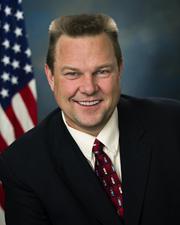

Current Status of Bill S 2561

Bill S 2561 is currently in the status of Bill Introduced since July 27, 2023. Bill S 2561 was introduced during Congress 118 and was introduced to the Senate on July 27, 2023.  Bill S 2561's most recent activity was Read twice and referred to the Committee on Homeland Security and Governmental Affairs. as of July 27, 2023

Bipartisan Support of Bill S 2561

Total Number of Sponsors
1
Democrat Sponsors
1
Republican Sponsors
0
Unaffiliated Sponsors
0
Total Number of Cosponsors
4
Democrat Cosponsors
4
Republican Cosponsors
0
Unaffiliated Cosponsors
0

Policy Area and Potential Impact of Bill S 2561

Primary Policy Focus

Government Operations and Politics

Alternate Title(s) of Bill S 2561

Close the Revolving Door Act of 2023
A bill to provide greater controls and restrictions on revolving door lobbying.

Comments

Latest Bills

To amend the Internal Revenue Code of 1986 to modify certain percentage depletion rules with respect to oil and gas wells.
Bill HR 8034April 7, 2026
To prohibit preferential screening for Members of Congress at airports, and for other purposes.
Bill HR 8049April 7, 2026
To expand credentialed, personalized financial and housing counseling to members of the Armed Forces serving on active duty or transitioning from service, and for other purposes.
Bill HR 8056April 7, 2026
To amend the FISA Amendments Act of 2008 to extend the authorities of title VII of the Foreign Intelligence Surveillance Act of 1978 through October 20, 2027, and for other purposes.
Bill HR 8035April 7, 2026
To amend title XVIII of the Social Security Act to ensure equitable payment for, and preserve Medicare beneficiary access to, cancer treatments under the Medicare hospital outpatient prospective payment system.
Bill HR 8032April 7, 2026
To amend title XLI of the FAST Act to lower the cost estimate threshold relating to eligibility of infrastructure projects for certain permitting processes, and for other purposes.
Bill HR 8003April 7, 2026
To amend the Defense Production Act of 1950 to limit eligibility for assistance, increase monetary penalties, establish fraud risk management processes, and for other purposes.
Bill HR 8030April 7, 2026
To prohibit a road construction project in the White River National Forest in the State of Colorado, and for other purposes.
Bill HR 8061April 7, 2026
To establish a reserve fund for the United States Secret Service, and for other purposes.
Bill HR 8058April 7, 2026
To amend title 38, United States Code, to require that a sterile processing technician of the Veterans Health Administration holds an appropriate professional certification, and for other purposes.
Bill HR 8052April 7, 2026