0
0

Fair Trade with China Enforcement Act

12/12/2023, 6:26 AM

Summary of Bill S 153

Bill 118 s 153, also known as the Fair Trade with China Enforcement Act, is a piece of legislation introduced in the US Congress. The main purpose of this bill is to address concerns related to trade practices and intellectual property rights violations by China.

The bill includes provisions that aim to strengthen enforcement mechanisms against unfair trade practices by China, such as currency manipulation and intellectual property theft. It also seeks to increase transparency in trade agreements with China and enhance monitoring of compliance with trade agreements.

Additionally, the Fair Trade with China Enforcement Act includes measures to address the issue of forced technology transfer, which is a practice where foreign companies are required to transfer their technology to Chinese companies in order to do business in China. This bill aims to protect American companies from being forced to give up their technology in exchange for access to the Chinese market. Overall, the Fair Trade with China Enforcement Act is designed to promote fair and reciprocal trade relations between the United States and China, while also protecting American businesses and intellectual property rights. It is currently being debated in Congress and may undergo revisions before being voted on.

Congressional Summary of S 153

Fair Trade with China Enforcement Act

This bill revises trade, finance, and tax provisions with respect to China.

Specifically, the bill directs the Department of Commerce to prohibit the export of certain U.S. technology and intellectual property to China, and it places a shareholder cap on Chinese investments in certain U.S. entities.

The bill prohibits federal agencies from using or procuring telecommunications equipment or services from Huawei Technologies Company, ZTE Corporation, or any other entity reasonably believed to be owned or controlled by China.

Further, the bill requires the U.S. Trade Representative to list certain Chinese products that receive support pursuant to China's Made in China 2025 policy. The bill expedites the countervailing duty process (i.e., the imposition of duties to offset a subsidy by a foreign government) for products on this list.

The bill amends the Internal Revenue Code to (1) repeal certain reduced withholding rates for residents of China, and (2) provide for the taxation of income received by China on certain U.S. investments.
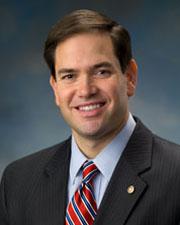
Current Status of Bill S 153

Bill S 153 is currently in the status of Bill Introduced since January 30, 2023. Bill S 153 was introduced during Congress 118 and was introduced to the Senate on January 30, 2023.  Bill S 153's most recent activity was Read twice and referred to the Committee on Finance. as of January 30, 2023

Bipartisan Support of Bill S 153

Total Number of Sponsors
1
Democrat Sponsors
0
Republican Sponsors
1
Unaffiliated Sponsors
0
Total Number of Cosponsors
0
Democrat Cosponsors
0
Republican Cosponsors
0
Unaffiliated Cosponsors
0

Policy Area and Potential Impact of Bill S 153

Primary Policy Focus

Foreign Trade and International Finance

Potential Impact Areas

- Agricultural equipment and machinery
- Alliances
- Asia
- Aviation and airports
- China
- Competitiveness, trade promotion, trade deficits
- Computers and information technology
- Electric power generation and transmission
- Energy storage, supplies, demand
- Foreign and international banking
- Foreign and international corporations
- Free trade and trade barriers
- Genetics
- Health technology, devices, supplies
- Hong Kong
- Human rights
- Hybrid, electric, and advanced technology vehicles
- Income tax exclusion
- Income tax rates
- Industrial policy and productivity
- Intellectual property
- Internet, web applications, social media
- Manufacturing
- Military procurement, research, weapons development
- Motor vehicles
- Protest and dissent
- Public contracts and procurement
- Railroads
- Securities
- Sovereignty, recognition, national governance and status
- Tariffs
- Taxation of foreign income
- Technology transfer and commercialization
- Telephone and wireless communication
- Trade restrictions
- U.S. and foreign investments
- Wages and earnings

Alternate Title(s) of Bill S 153

Fair Trade with China Enforcement Act
A bill to safeguard certain technology and intellectual property in the United States from export to or influence by the People's Republic of China and to protect United States industry from unfair competition by the People's Republic of China, and for other purposes.

Comments

Sponsors and Cosponsors of S 153

Latest Bills

Local Law Enforcement Support Act of 2026
Bill HR 8564April 29, 2026
Condemning the attempted assassination of President Donald J. Trump on April 25, 2026, condemning the multiple attempts against the President's life, and recognizing the critical mission of the Department of Homeland Security.
Bill HRES 1220April 29, 2026
Expressing support for the designation of Undiagnosed Awareness Month.
Bill HRES 1223April 29, 2026
Directing the President, pursuant to section 5(c) of the War Powers Resolution, to remove United States Armed Forces from hostilities with Iran.
Bill HCONRES 93April 29, 2026
Supporting the designation of the week of April 27 through May 1, 2026, as "National Specialized Instructional Support Personnel Appreciation Week".
Bill HRES 1221April 29, 2026
Recognizing the designation of the week of April 24 through April 30 as the annual "National Reentry Week".
Bill HRES 1222April 29, 2026
Directing the President, pursuant to section 5(c) of the War Powers Resolution, to remove United States Armed Forces from hostilities with Iran.
Bill HCONRES 92April 29, 2026
Expressing support for the month of April as "Sikh History Month".
Bill HRES 1219April 29, 2026
FISH Act of 2025
Bill HR 3756April 29, 2026
To amend the Research and Development, Competition, and Innovation Act to require each institution of higher education to certify as part of an application for a research and development award that such institution does not operate certain branch campuses, and for other purposes.
Bill HR 8558April 29, 2026