0
0
0
ACRES Act
2/5/2024, 11:45 AM
Summary of Bill HR 1567
The ACRES Act, also known as Bill 118 hr 1567, is a piece of legislation introduced in the US Congress that aims to address issues related to land conservation and preservation. The main goal of the bill is to increase the amount of land protected for conservation purposes, particularly in areas that are at risk of development or environmental degradation.
The ACRES Act proposes several key provisions to achieve this goal. One of the main components of the bill is the establishment of a grant program that would provide funding to states and local governments for the acquisition of land for conservation purposes. This funding would be used to purchase land that is important for wildlife habitat, water quality protection, and recreational opportunities.
Additionally, the ACRES Act includes provisions to incentivize private landowners to participate in conservation efforts. The bill proposes tax incentives for landowners who voluntarily agree to conserve their land, such as through conservation easements or other conservation agreements. This would help to increase the amount of land protected for conservation purposes without relying solely on government funding. Overall, the ACRES Act is aimed at increasing the amount of land protected for conservation purposes in the United States. By providing funding for land acquisition and incentivizing private landowners to participate in conservation efforts, the bill seeks to preserve important natural areas and wildlife habitats for future generations.
The ACRES Act proposes several key provisions to achieve this goal. One of the main components of the bill is the establishment of a grant program that would provide funding to states and local governments for the acquisition of land for conservation purposes. This funding would be used to purchase land that is important for wildlife habitat, water quality protection, and recreational opportunities.
Additionally, the ACRES Act includes provisions to incentivize private landowners to participate in conservation efforts. The bill proposes tax incentives for landowners who voluntarily agree to conserve their land, such as through conservation easements or other conservation agreements. This would help to increase the amount of land protected for conservation purposes without relying solely on government funding. Overall, the ACRES Act is aimed at increasing the amount of land protected for conservation purposes in the United States. By providing funding for land acquisition and incentivizing private landowners to participate in conservation efforts, the bill seeks to preserve important natural areas and wildlife habitats for future generations.
Congressional Summary of HR 1567
Accurately Counting Risk Elimination Solutions Act or the ACRES Act
This bill requires the Department of Agriculture (USDA) and the Department of the Interior to submit accurate reports regarding hazardous fuels reduction activity.
Hazardous fuels reduction activity means any vegetation management activity to reduce the risk of wildfire but excludes the award of contracts to conduct hazardous fuels reduction activities.
Specifically, USDA and Interior must
- include in the materials submitted in support of the President's budget each fiscal year a report on the number of acres of federal land on which such activities were carried out during the preceding year, and
- implement standardized procedures for tracking data related to such activities.
The standardized procedures must include
- regular, standardized data reviews of the accuracy and timely input of data used to track hazardous fuels reduction activities;
- verification methods that validate whether such data accurately correlates to such activities;
- an analysis of the short- and long-term effectiveness of such activities on reducing the risk of wildfire; and
- for hazardous fuels reduction activities that occur partially within the wildland-urban interface, methods to distinguish which acres are located within and which located outside the wildland-urban interface.
The Government Accountability Office shall (1) conduct a study on this bill's implementation, and (2) submit a report to Congress with the results of the study.
Read the Full Bill
Current Status of Bill HR 1567
Bill HR 1567 is currently in the status of Introduced to Senate since September 14, 2023. Bill HR 1567 was introduced during Congress 118 and was introduced to the House on March 10, 2023. Bill HR 1567's most recent activity was Received in the Senate and Read twice and referred to the Committee on Energy and Natural Resources. as of September 14, 2023
Bipartisan Support of Bill HR 1567
Total Number of Sponsors
1Democrat Sponsors
0Republican Sponsors
1Unaffiliated Sponsors
0Total Number of Cosponsors
0Democrat Cosponsors
0Republican Cosponsors
0Unaffiliated Cosponsors
0Policy Area and Potential Impact of Bill HR 1567
Primary Policy Focus
Public Lands and Natural ResourcesPotential Impact Areas
- Congressional oversight
- Fires
- Forests, forestry, trees
- Government studies and investigations
- Hazardous wastes and toxic substances
Alternate Title(s) of Bill HR 1567
ACRES Act
Accurately Counting Risk Elimination Solutions Act
ACRES Act
ACRES Act
Accurately Counting Risk Elimination Solutions Act
ACRES Act
Accurately Counting Risk Elimination Solutions Act
To require that the Secretary of Agriculture and the Secretary of the Interior submit accurate reports regarding hazardous fuels reduction activities, and for other purposes.
Comments
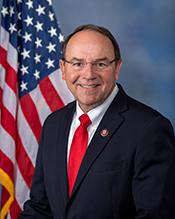
Sponsors and Cosponsors of HR 1567
Latest Bills
TRAPS Act
Bill HR 4936September 18, 2026
Apples to Apples Comparison Act of 2025
Bill HR 4093September 18, 2026
American Lending Fairness Act of 2026
Bill HR 7866September 18, 2026
Civil Investigative Demand Reform Act of 2025
Bill HR 1653September 18, 2026
American Reserve Modernization Act of 2026
Bill HR 8957September 18, 2026
Preventive Health Savings Act
Bill HR 4464September 18, 2026
PEARL Act
Bill HR 9327September 18, 2026
Medically Tailored Home-Delivered Meals Program Pilot Act
Bill HR 5439September 18, 2026
To designate the facility of the United States Postal Service located at 117 West Lovett Street in Charlotte, Michigan, as the "Francis C. Flaherty Post Office Building".
Bill HR 9570September 18, 2026
To designate the facility of the United States Postal Service located at 1019 Avenue H in Fort Madison, Iowa, as the "Martin L. Graber Post Office".
Bill HR 4707September 18, 2026