0
0

Protecting Speech from Government Interference Act

12/15/2023, 3:53 PM

Summary of Bill HR 140

Bill 118 hr 140, also known as the Protecting Speech from Government Interference Act, aims to protect the First Amendment rights of individuals and organizations by prohibiting the government from taking any action that would interfere with their freedom of speech. The bill specifically targets government agencies and officials who may attempt to suppress or censor speech that they disagree with.

The bill states that no government agency or official shall take any action to restrict or regulate the content of speech, including political speech, on the basis of its viewpoint or message. This means that individuals and organizations have the right to express their opinions and beliefs without fear of government retaliation or censorship.

Additionally, the bill prohibits government agencies from requiring individuals or organizations to disclose their political affiliations or beliefs as a condition of receiving government benefits or contracts. This provision is aimed at preventing government agencies from discriminating against individuals or organizations based on their political beliefs. Overall, the Protecting Speech from Government Interference Act seeks to uphold the principles of free speech and protect individuals and organizations from government censorship or retaliation based on their political beliefs. It is designed to ensure that all Americans have the right to express their opinions and beliefs without fear of government interference.

Congressional Summary of HR 140

Protecting Speech from Government Interference Act

This bill generally prohibits federal employees from censoring the speech of others while acting in an official capacity.

Specifically, the bill prohibits employees of executive agencies or who are otherwise in the competitive service from (1) using their official authority to censor a private entity; or (2) engaging in censorship of a private entity while on duty, wearing a uniform, or using official government property. The bill provides certain exceptions for law enforcement, subject to specified reporting requirements.

Employees are subject to disciplinary action, civil penalties, or both for violations.

The bill defines censor or censorship to mean influencing or coercing, or directing another to influence or coerce, for the removal of lawful speech, the addition of disclaimers, or the restriction of access with respect to any interactive computer service (e.g., social media).
Current Status of Bill HR 140

Bill HR 140 is currently in the status of Introduced to Senate since March 14, 2023. Bill HR 140 was introduced during Congress 118 and was introduced to the House on January 9, 2023.  Bill HR 140's most recent activity was Received in the Senate and Read twice and referred to the Committee on Homeland Security and Governmental Affairs. as of March 14, 2023

Bipartisan Support of Bill HR 140

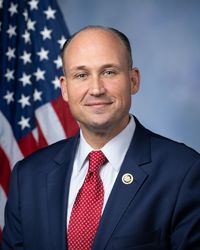
Total Number of Sponsors
1
Democrat Sponsors
0
Republican Sponsors
1
Unaffiliated Sponsors
0
Total Number of Cosponsors
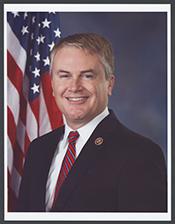
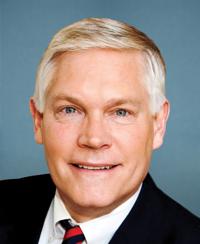
32
Democrat Cosponsors
0
Republican Cosponsors
32
Unaffiliated Cosponsors
0

Policy Area and Potential Impact of Bill HR 140

Primary Policy Focus

Government Operations and Politics

Potential Impact Areas

- Employment discrimination and employee rights
- First Amendment rights
- Government employee pay, benefits, personnel management
- Internet, web applications, social media

Alternate Title(s) of Bill HR 140

Protecting Speech from Government Interference Act
To amend title 5, United States Code, to prohibit Federal employees from advocating for censorship of viewpoints in their official capacity, and for other purposes.

Comments

Latest Bills

Electric Supply Chain Act
Bill HR 3638December 4, 2025
SCORE Act
Bill HR 4312December 4, 2025
Power Plant Reliability Act of 2025
Bill HR 3632December 4, 2025
Transparency in Reporting of Adversarial Contributions to Education Act
Bill HR 1049December 4, 2025
To require public elementary and secondary schools to disclose certain funds received from, or contracts with, a foreign source, and for other purposes.
Bill HR 1005December 4, 2025
DUMP Red Tape Act
Bill HR 4305December 4, 2025
Small Business Regulatory Reduction Act of 2025
Bill HR 2965December 4, 2025
Improving Social Security’s Service to Victims of Identity Theft Act
Bill HR 5345December 4, 2025
Pecos Watershed Protection Act
Bill S 1319December 4, 2025
Lumbee Fairness Act
Bill S 107December 4, 2025
Providing for consideration of the bill (H.R. 140) to amend title 5, United States Code, to prohibit Federal employees from advocating for censorship of viewpoints in their official capacity, and for other purposes; providing for consideration of the joint resolution (H.J. Res. 27) providing for congressional disapproval under chapter 8 of title 5, United States Code, of the rule submitted by the Department of the Army, Corps of Engineers, Department of Defense and the Environmental Protection Agency relating to "Revised Definition of 'Waters of the United States'"; and providing for consideration of the bill (S. 619) to require the Director of National Intelligence to declassify information relating to the origin of COVID-19, and for other purposes.
Bill HRES 199December 15, 2023