0
0

Protecting Taxpayers and Victims of Unemployment Fraud Act

12/15/2023, 3:54 PM

Summary of Bill HR 1163

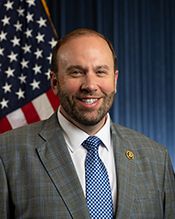
Bill 118 hr 1163, also known as the Protecting Taxpayers and Victims of Unemployment Fraud Act, aims to address the issue of unemployment fraud in the United States. The bill was introduced in the House of Representatives on February 25, 2021, by Representative Jackie Walorski.

The main purpose of the bill is to protect taxpayers and individuals who have been victims of unemployment fraud by requiring states to implement stronger measures to prevent and detect fraudulent unemployment claims. This includes implementing identity verification measures, conducting regular audits of unemployment claims, and improving coordination between state and federal agencies to identify and investigate fraudulent activity.

Additionally, the bill seeks to increase penalties for individuals who commit unemployment fraud, including fines and potential imprisonment. It also includes provisions to provide additional resources to states to help them combat fraud and improve their unemployment insurance systems. Overall, the Protecting Taxpayers and Victims of Unemployment Fraud Act aims to strengthen the integrity of the unemployment insurance system and protect both taxpayers and individuals who rely on these benefits. The bill has received bipartisan support in Congress and is currently being considered by the House Committee on Ways and Means.

Congressional Summary of HR 1163

Protecting Taxpayers and Victims of Unemployment Fraud Act

This bill addresses fraud and overpayments of pandemic unemployment insurance (UI) benefits, including by providing incentives for states to investigate and recover overpayments of these benefits.

Specifically, the bill allows states to retain 25% of any recovered fraudulent overpayments. These retained funds may be used for modernizing unemployment compensation systems and information technology, reimbursing administrative costs, hiring fraud investigators and prosecutors, and for other program integrity activities.

Additionally, the bill allows states to retain 5% of any overpayments of regular and extended UI benefits. A state must, in order to retain these overpayments, certify that it has met certain conditions for data matching.

Next, the bill extends from 3 to 10 years the time during which states can recover overpayments of pandemic UI benefits.

Further, the bill extends flexibilities for states to hire temporary staff on a noncompetitive basis to identify, pursue, and recover fraudulent overpayments under federal pandemic unemployment compensation programs authorized by the Coronavirus Aid, Relief, and Economic Security Act (CARES Act).

The bill also extends from 5 to 10 years the statute of limitations for federal criminal charges or civil enforcement actions related to UI fraud.

Finally, the bill repeals a section of the CARES Act (as amended by the American Rescue Plan of 2021) that provided funding for UI program integrity activities. Subject to appropriations, the unobligated balance of this funding shall be transferred to the Department of the Treasury and periodically credited to the appropriate state account in the Unemployment Trust Fund, as outlined by the bill.
Current Status of Bill HR 1163

Bill HR 1163 is currently in the status of Bill Introduced since February 24, 2023. Bill HR 1163 was introduced during Congress 118 and was introduced to the House on February 24, 2023.  Bill HR 1163's most recent activity was Motion to reconsider laid on the table Agreed to without objection. as of May 11, 2023

Bipartisan Support of Bill HR 1163

Total Number of Sponsors
1
Democrat Sponsors
0
Republican Sponsors
1
Unaffiliated Sponsors
0
Total Number of Cosponsors
0
Democrat Cosponsors
0
Republican Cosponsors
0
Unaffiliated Cosponsors
0

Policy Area and Potential Impact of Bill HR 1163

Primary Policy Focus

Labor and Employment

Alternate Title(s) of Bill HR 1163

Protecting Taxpayers and Victims of Unemployment Fraud Act
To provide incentives for States to recover fraudulently paid Federal and State unemployment compensation, and for other purposes.

Comments

Sponsors and Cosponsors of HR 1163

Latest Bills

Veterans’ Compensation Cost-of-Living Adjustment Act of 2026
Bill S 4487May 18, 2026
Veterans’ Compensation Cost-of-Living Adjustment Act of 2026
Bill HR 8552May 18, 2026
Making appropriations for military construction, the Department of Veterans Affairs, and related agencies for the fiscal year ending September 30, 2027, and for other purposes.
Bill HR 8469May 17, 2026
Commerce, Justice, Science, and Related Agencies Appropriations Act, 2027
Bill HR 8845May 17, 2026
LIFT Act
Bill HR 8864May 16, 2026
Creating Early Childhood Leaders Act
Bill HR 8859May 16, 2026
To amend title 5, United States Code, to add certain employees of the Bureau of Alcohol, Tobacco, Firearms and Explosives to the definition of employees in fire protection activities for the purpose of compensation for certain illnesses and diseases deemed to be proximately caused by employment in fire protection activities.
Bill HR 8863May 16, 2026
Expressing support for the designation of May 17, 2026, as "DIPG Awareness Day" to raise awareness and encourage research into cures for diffuse intrinsic pontine glioma (DIPG) and pediatric cancers in general.
Bill HRES 1295May 16, 2026
To amend title 18, United States, to include property damage in acts that constitute domestic terrorism, and for other purposes.
Bill HR 8843May 16, 2026
CRUISE Act
Bill HR 7083May 16, 2026
Protecting Taxpayers and Victims of Unemployment Fraud Act
Bill S 1587March 13, 2024
Providing for consideration of the bill (H.R. 2) to secure the borders of the United States, and for other purposes, and providing for consideration of the bill (H.R. 1163) to provide incentives for States to recover fraudulently paid Federal and State unemployment compensation, and for other purposes.
Bill HRES 383December 15, 2023