0
0
0
FLOODS Act
3/9/2023, 5:47 PM
Summary of Bill HR 1438
The FLOODS Act, also known as Bill 117 hr 1438, is a piece of legislation introduced in the US Congress aimed at improving the nation's ability to respond to and mitigate the impacts of flooding. The bill focuses on several key areas, including enhancing flood mapping and forecasting capabilities, improving coordination between federal, state, and local agencies, and increasing funding for flood mitigation projects.
One of the main provisions of the FLOODS Act is the establishment of a National Flood Mapping Program, which would be responsible for updating and maintaining accurate flood maps across the country. These maps are crucial for identifying areas at high risk of flooding and informing land use decisions and emergency response efforts.
Additionally, the bill seeks to improve coordination between different levels of government by creating a National Flood Interagency Task Force. This task force would be responsible for coordinating flood response and recovery efforts, as well as developing best practices for flood mitigation and preparedness. The FLOODS Act also includes provisions for increasing funding for flood mitigation projects, such as levee improvements, wetland restoration, and infrastructure upgrades. These projects are essential for reducing the impact of flooding on communities and protecting lives and property. Overall, the FLOODS Act is a comprehensive piece of legislation that aims to strengthen the nation's ability to respond to and mitigate the impacts of flooding. By improving flood mapping and forecasting capabilities, enhancing coordination between agencies, and increasing funding for mitigation projects, the bill seeks to better protect communities from the devastating effects of flooding.
One of the main provisions of the FLOODS Act is the establishment of a National Flood Mapping Program, which would be responsible for updating and maintaining accurate flood maps across the country. These maps are crucial for identifying areas at high risk of flooding and informing land use decisions and emergency response efforts.
Additionally, the bill seeks to improve coordination between different levels of government by creating a National Flood Interagency Task Force. This task force would be responsible for coordinating flood response and recovery efforts, as well as developing best practices for flood mitigation and preparedness. The FLOODS Act also includes provisions for increasing funding for flood mitigation projects, such as levee improvements, wetland restoration, and infrastructure upgrades. These projects are essential for reducing the impact of flooding on communities and protecting lives and property. Overall, the FLOODS Act is a comprehensive piece of legislation that aims to strengthen the nation's ability to respond to and mitigate the impacts of flooding. By improving flood mapping and forecasting capabilities, enhancing coordination between agencies, and increasing funding for mitigation projects, the bill seeks to better protect communities from the devastating effects of flooding.
Congressional Summary of HR 1438
Flood Level Observation, Operations, and Decision Support Act or the FLOODS Act
This bill addresses forecasting and the communication of flood, tornado, and hurricane events by the National Oceanic and Atmospheric Administration (NOAA).
Among other provisions, the bill
- directs NOAA to establish a National Integrated Flood Information System to better inform and provide for more timely decision-making to reduce flood-related effects and costs;
- establishes partnerships with institutions of higher education and federal agencies to improve total water predictions;
- designates a service coordination hydrologist at each National Weather Service River Forecast Center to increase impact-based decision support services at the state and local level;
- requires NOAA to evaluate and improve flood watches and warnings and communication of information to support preparation and responses to floods;
- ensures that the tornado warning improvement and extension program periodically examines the value of incorporating innovative observations, such as acoustic or infrasonic measurements, observations from phased array radars, and observations from mesonets;
- requires NOAA to estimate and communicate the frequency of precipitation;
- establishes an Interagency Coordinating Committee on Water Management to ensure that federal agencies that engage in water-related matters, including water storage and supplies, water quality and restoration activities, water infrastructure, transportation on rivers and inland waterways, and water forecasting, work together where such agencies have joint or overlapping responsibilities; and
- directs NOAA to conduct an analysis of gaps in the availability of snow-related data to assess and predict floods and flood impacts.
Read the Full Bill
Current Status of Bill HR 1438
Bill HR 1438 is currently in the status of Bill Introduced since February 26, 2021. Bill HR 1438 was introduced during Congress 117 and was introduced to the House on February 26, 2021. Bill HR 1438's most recent activity was Referred to the Subcommittee on Water, Oceans, and Wildlife. as of April 7, 2021
Bipartisan Support of Bill HR 1438
Total Number of Sponsors
1Democrat Sponsors
1Republican Sponsors
0Unaffiliated Sponsors
0Total Number of Cosponsors
32Democrat Cosponsors
28Republican Cosponsors
4Unaffiliated Cosponsors
0Policy Area and Potential Impact of Bill HR 1438
Primary Policy Focus
Public Lands and Natural ResourcesPotential Impact Areas
- Advanced technology and technological innovations
- Atmospheric science and weather
- Behavioral sciences
- Congressional oversight
- Department of Commerce
- Earth sciences
- Emergency planning and evacuation
- Employee hiring
- Environmental assessment, monitoring, research
- Environmental education
- Executive agency funding and structure
- Floods and storm protection
- Geography and mapping
- Government information and archives
- Government studies and investigations
- Higher education
- Hydrology and hydrography
- Marine and inland water transportation
- Minority education
- Natural disasters
- Research administration and funding
- Science and engineering education
- Student aid and college costs
- Water quality
- Water storage
- Water use and supply
Alternate Title(s) of Bill HR 1438
FLOODS Act
To establish a national integrated flood information system within the National Oceanic and Atmospheric Administration, and for other purposes.
FLOODS Act
Flood Level Observation, Operations, and Decision Support Act
Comments
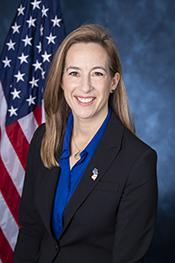
Sponsors and Cosponsors of HR 1438





Latest Bills
TRAPS Act
Bill HR 4936September 18, 2026
Apples to Apples Comparison Act of 2025
Bill HR 4093September 18, 2026
American Lending Fairness Act of 2026
Bill HR 7866September 18, 2026
Civil Investigative Demand Reform Act of 2025
Bill HR 1653September 18, 2026
American Reserve Modernization Act of 2026
Bill HR 8957September 18, 2026
Preventive Health Savings Act
Bill HR 4464September 18, 2026
PEARL Act
Bill HR 9327September 18, 2026
Medically Tailored Home-Delivered Meals Program Pilot Act
Bill HR 5439September 18, 2026
To designate the facility of the United States Postal Service located at 117 West Lovett Street in Charlotte, Michigan, as the "Francis C. Flaherty Post Office Building".
Bill HR 9570September 18, 2026
To designate the facility of the United States Postal Service located at 1019 Avenue H in Fort Madison, Iowa, as the "Martin L. Graber Post Office".
Bill HR 4707September 18, 2026
FLOODS Act
Bill S 558May 11, 2023