0
0

Ethics in Public Service Act

1/11/2023, 1:47 PM

Summary of Bill HR 1077

Bill 117 HR 1077, also known as the Ethics in Public Service Act, aims to establish stricter ethical guidelines for public officials in the United States Congress. The bill seeks to address concerns about corruption and conflicts of interest among elected officials by implementing new rules and regulations.

Some key provisions of the bill include requiring public officials to disclose any financial interests or investments that could potentially influence their decision-making. This transparency is intended to prevent conflicts of interest and ensure that elected officials are acting in the best interest of the public.

Additionally, the Ethics in Public Service Act would establish an independent ethics committee to investigate allegations of misconduct or unethical behavior among members of Congress. This committee would have the authority to recommend disciplinary action, including censure or expulsion, for those found to have violated the ethical guidelines outlined in the bill. Overall, the Ethics in Public Service Act is designed to promote accountability and integrity among public officials, and to restore public trust in the government. By setting clear standards for ethical conduct and enforcing consequences for violations, the bill aims to uphold the principles of honesty and integrity in public service.

Congressional Summary of HR 1077

Ethics in Public Service Act

This bill provides statutory authority for provisions of the executive order titled Ethics Commitments by Executive Branch Personnel, which was issued on January 21, 2009, by President Barack H. Obama. The order required political appointees in the executive branch to sign an ethics pledge that restricted lobbying and related activities during and after government employment, including prohibitions on appointees communicating with their former agencies for two years post-employment and on lobbying agencies for the remainder of the presidential administration. The order was eventually revoked and replaced with executive orders from subsequent administrations.

On January 20, 2021, President Joseph R. Biden, Jr. issued an executive order titled Ethics Commitments by Executive Branch Personnel, which requires appointees to sign an ethics pledge with both similar and different provisions. For example, the order's pledge (1) prohibits post-employment lobbying, including lobbying on behalf of foreign governments, for the remainder of a presidential administration or for two years after appointments end, whichever is later; and (2) restricts appointees from accepting cash payments or non-cash benefits from former employers that are contingent on government employment (also known as golden parachutes).
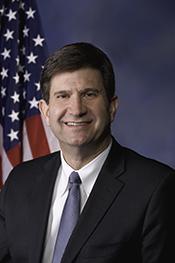
Current Status of Bill HR 1077

Bill HR 1077 is currently in the status of Bill Introduced since February 15, 2021. Bill HR 1077 was introduced during Congress 117 and was introduced to the House on February 15, 2021.  Bill HR 1077's most recent activity was Referred to the House Committee on Oversight and Reform. as of February 15, 2021

Bipartisan Support of Bill HR 1077

Total Number of Sponsors
1
Democrat Sponsors
1
Republican Sponsors
0
Unaffiliated Sponsors
0
Total Number of Cosponsors
0
Democrat Cosponsors
0
Republican Cosponsors
0
Unaffiliated Cosponsors
0

Policy Area and Potential Impact of Bill HR 1077

Primary Policy Focus

Government Operations and Politics

Potential Impact Areas

- Family relationships
- Federal officials
- Government employee pay, benefits, personnel management
- Government ethics and transparency, public corruption
- Government studies and investigations
- Presidents and presidential powers, Vice Presidents
- Public participation and lobbying

Alternate Title(s) of Bill HR 1077

Ethics in Public Service Act
To amend the Ethics in Government Act of 1978 to require senior executive branch employees to sign an ethics pledge, and for other purposes.
Ethics in Public Service Act

Comments

Sponsors and Cosponsors of HR 1077

Latest Bills

To amend title 5, United States Code, to authorize the increase of the retirement age in the United States Capitol Police.
Bill HR 8364April 24, 2026
Expressing support for rural communities across the United States as stewards of the environment, major suppliers of United States energy resources, critical providers of food production and manufacturing capacity, and drivers of national economic stability, and recognizing the work of the House of Representatives in the 119th Congress in support of those vital communities.
Bill HRES 1182April 24, 2026
Patient Safety and Whistleblower Protections Act
Bill HR 8310April 24, 2026
A bill to approve the settlement of the water rights claims of the Agua Caliente Band of Cahuilla Indians, and for other purposes.
Bill S 4368April 24, 2026
CHILD Act of 2025
Bill S 1528April 24, 2026
A bill to extend section 702 of the Foreign Intelligence Surveillance Act of 1978 for 3 years.
Bill S 4344April 24, 2026
Recognizing and honoring National Mushroom Day and the contributions of Chester and Berks Counties to the national mushroom industry and to healthy diets.
Bill HRES 1184April 24, 2026
Recognizing April 2026 as "Distracted Driving Awareness Month" and promoting efforts to help prevent tragic and preventable crashes, deaths, and injuries caused by distracted driving.
Bill HRES 1194April 24, 2026
A concurrent resolution setting forth the congressional budget for the United States Government for fiscal year 2026 and setting forth the appropriate budgetary levels for fiscal years 2027 through 2035.
Bill SCONRES 33April 24, 2026
A joint resolution to direct the removal of United States Armed Forces from hostilities within or against the Islamic Republic of Iran that have not been authorized by Congress.
Bill SJRES 161April 24, 2026
For the People Act of 2021
Bill S 2093February 22, 2023
For the People Act of 2021
Bill S 1May 11, 2023
For the People Act of 2021
Bill HR 1May 11, 2023