0
0

Cybersecurity Workforce Assessment Act

3/14/2024, 12:48 PM

Congressional Summary of HR 2952

(This measure has not been amended since it was passed by the Senate on December 10, 2014. The summary of that version is repeated here.)

Cybersecurity Workforce Assessment Act - Directs the Secretary of Homeland Security, within 180 days and annually thereafter for three years, to conduct an assessment of the cybersecurity workforce of the Department of Homeland Security (DHS), which shall include information on:

  • the readiness and capacity of such workforce to meet its cybersecurity mission;
  • where cybersecurity workforce positions are located within DHS;
  • which such positions are performed by permanent full-time equivalent DHS employees, by independent contractors, and by individuals employed by other federal agencies;
  • which such positions are vacant;
  • the percentage of individuals within each Cybersecurity Category and Specialty Area who received essential training to perform their jobs; and
  • in cases in which such training was not received, what challenges were encountered regarding the provision of such training.

Directs the Secretary to develop, maintain, and update a comprehensive workforce strategy to enhance the readiness, capacity, training, recruitment, and retention of DHS's cybersecurity workforce, which shall include a description of:

  • a multi-phased recruitment plan,
  • a 5-year implementation plan,
  • a 10-year projection of the cybersecurity workforce needs of DHS,
  • any obstacle impeding the hiring and development of such workforce, and
  • any gap in the existing DHS cybersecurity workforce and a plan to fill such gap.

Requires the Secretary to submit to the appropriate congressional committees: (1) annual updates on such assessment and on the Secretary's progress in carrying out such strategy; and (2) a report on the feasibility, cost, and benefits of establishing a Cybersecurity Fellowship Program to offer a tuition payment plan for individuals pursuing undergraduate and doctoral degrees who agree to work for DHS for an agreed-upon period.
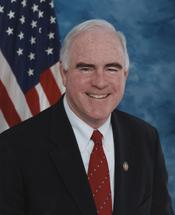

Current Status of Bill HR 2952

Bill HR 2952 is currently in the status of Bill Introduced since August 1, 2013. Bill HR 2952 was introduced during Congress 113 and was introduced to the House on August 1, 2013.  Bill HR 2952's most recent activity was Became Public Law No: 113-246. as of December 18, 2014

Bipartisan Support of Bill HR 2952

Total Number of Sponsors
1
Democrat Sponsors
0
Republican Sponsors
1
Unaffiliated Sponsors
0
Total Number of Cosponsors
1
Democrat Cosponsors
1
Republican Cosponsors
0
Unaffiliated Cosponsors
0

Policy Area and Potential Impact of Bill HR 2952

Primary Policy Focus

Emergency Management

Potential Impact Areas

- Advanced technology and technological innovations
- Computer security and identity theft
- Government information and archives
- Homeland security
- Public-private cooperation
- Research administration and funding
- Research and development
- Technology assessment
- Technology transfer and commercialization

Alternate Title(s) of Bill HR 2952

Cybersecurity Workforce Assessment Act
To amend the Homeland Security Act of 2002 to make certain improvements in the laws relating to the advancement of security technologies for critical infrastructure protection, and for other purposes.
Cybersecurity Workforce Assessment Act
CIRDA Act of 2013
Critical Infrastructure Research and Development Advancement Act of 2013
An act to require the Secretary of Homeland Security to assess the cybersecurity workforce of the Department of Homeland Security and develop a comprehensive workforce strategy, and for other purposes.
CIRDA Act of 2014
Cybersecurity Workforce Assessment Act
Critical Infrastructure Research and Development Advancement Act of 2014
CIRDA Act of 2013
Critical Infrastructure Research and Development Advancement Act of 2013

Comments

Latest Bills

A joint resolution to direct the removal of United States Armed Forces from hostilities within or against the Islamic Republic of Iran that have not been authorized by Congress.
Bill SJRES 185May 20, 2026
A bill to amend the definition of professional student in the Higher Education Act of 1965.
Bill S 4568May 20, 2026
A bill to amend the Higher Education Act of 1965 to provide enhanced student loan relief to educators, and for other purposes.
Bill S 4567May 20, 2026
A bill to amend the Fair Labor Standards Act of 1938 to establish a minimum salary threshold for bona fide executive, administrative, and professional employees exempt from Federal overtime compensation requirements, and automatically update such threshold each year, and for other purposes.
Bill S 4551May 20, 2026
A bill to designate the Great Lakes Commission as a Regional Great Lakes Partnership, and for other purposes.
Bill S 4573May 20, 2026
A bill to amend title 46, United States Code, to require the Secretary of the department in which the Coast Guard is operating to assess cybersecurity risks of certain software and hardware used in certain maritime facilities, and for other purposes.
Bill S 4564May 20, 2026
A resolution expressing support for the designation of May 2026 as "Motorcycle Safety Awareness Month".
Bill SRES 740May 20, 2026
A bill to require the Environmental Protection Agency to establish a tropospheric ozone research program, and for other purposes.
Bill S 4571May 20, 2026
A resolution recognizing the significance of Jewish American Heritage Month and calling on elected officials and civil society leaders to counter antisemitism.
Bill SRES 738May 20, 2026
A bill to modernize and streamline the permitting process for broadband infrastructure on Federal land, and for other purposes.
Bill S 4561May 20, 2026