0
0

Territorial Economic Recovery Act

2/8/2025, 5:53 AM

Summary of Bill HR 363

Bill 119 HR 363, also known as the "Foreign Income Exclusion Act," aims to make changes to the Internal Revenue Code of 1986 in order to exclude certain amounts from the tested income of controlled foreign corporations. This bill is designed to address issues related to the taxation of income earned by foreign subsidiaries of US companies.

The main purpose of this bill is to provide relief for US companies with controlled foreign corporations by excluding certain amounts from their tested income. This exclusion would help reduce the tax burden on these companies and encourage them to invest and expand their operations overseas.

In addition to excluding certain amounts from tested income, the bill also includes provisions for other purposes related to the taxation of controlled foreign corporations. These provisions are aimed at simplifying the tax code and making it easier for companies to comply with tax laws. Overall, Bill 119 HR 363 seeks to make changes to the tax code that will benefit US companies with controlled foreign corporations. By excluding certain amounts from tested income and simplifying tax laws, this bill aims to promote economic growth and competitiveness in the global marketplace.

Congressional Summary of HR 363

Territorial Economic Recovery Act

This bill excludes the income of certain controlled foreign corporations in U.S. territories from the calculation of global intangible low-taxed income (GILTI) for federal tax purposes.

Under current law, a U.S. shareholder of a controlled foreign corporation is required to include in gross income the GILTI of the shareholder. The calculation of GILTI is based, in part, on the controlled foreign corporation’s tested income (the controlled foreign corporation’s gross income less certain exclusions).

Under the bill, the income from a qualified possession corporation that is effectively connected with an active trade or business within a U.S. territory (Puerto Rico, U.S. Virgin Islands, Guam, American Samoa, and the Northern Mariana Islands) is excluded from gross income for purposes of calculating a controlled foreign corporation’s tested income.

The bill defines a qualified possession corporation as any controlled foreign corporation if, for a three-year period ending in the prior tax year (or for the existence of the controlled foreign corporation if less than three years) (1) 80% or more of the controlled foreign corporation’s gross income was derived from a U.S. territory, and (2) 75% or more of the controlled foreign corporation’s gross income was effectively connected to the active conduct of a trade or business within a U.S. territory.
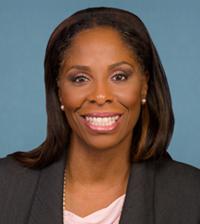
Current Status of Bill HR 363

Bill HR 363 is currently in the status of Bill Introduced since January 13, 2025. Bill HR 363 was introduced during Congress 119 and was introduced to the House on January 13, 2025.  Bill HR 363's most recent activity was Referred to the House Committee on Ways and Means. as of January 13, 2025

Bipartisan Support of Bill HR 363

Total Number of Sponsors
1
Democrat Sponsors
1
Republican Sponsors
0
Unaffiliated Sponsors
0
Total Number of Cosponsors
0
Democrat Cosponsors
0
Republican Cosponsors
0
Unaffiliated Cosponsors
0

Policy Area and Potential Impact of Bill HR 363

Primary Policy Focus

Alternate Title(s) of Bill HR 363

To amend the Internal Revenue Code of 1986 to exclude certain amounts from the tested income of controlled foreign corporations, and for other purposes.

Comments

Sponsors and Cosponsors of HR 363

Latest Bills

A resolution commending the American Chemical Society on the occasion of its 150th anniversary and recognizing its many years of service to the United States.
Bill SRES 702May 4, 2026
Commending the American Chemical Society on the occasion of its 150th anniversary and recognizing its many years of service to the United States.
Bill HRES 1157May 4, 2026
A resolution supporting the mission and goals of National Fentanyl Awareness Day in 2026, including increasing individual and public awareness of the impact of fake or counterfeit fentanyl pills on families and young people.
Bill SRES 704May 4, 2026
Supporting the mission and goals of National Fentanyl Awareness Day in 2026, including increasing individual and public awareness of the impact of fake or counterfeit fentanyl pills on families and young people.
Bill HRES 1234May 4, 2026
A resolution expressing support for the designation of the week of May 3, 2026, through May 9, 2026, as "National Small Business Week" to celebrate the contributions of small businesses and entrepreneurs in every community in the United States.
Bill SRES 703May 4, 2026
A resolution designating the week of April 20 through 26, 2026, as "National Dark Sky Week".
Bill SRES 701May 4, 2026
A resolution recognizing the significance of Community College Month in April as a celebration of more than 1,000 institutions throughout the United States supporting access to higher education, workforce training, and more broadly sustaining and advancing the economic prosperity of the United States.
Bill SRES 686May 4, 2026
A resolution designating the week of April 20 through April 24, 2026, as "National Home Visiting Week".
Bill SRES 692May 4, 2026
A bill to amend the FISA Amendments Act of 2008 to extend the authorities of title VII of the Foreign Intelligence Surveillance Act of 1978, and for other purposes.
Bill S 4465May 4, 2026
A resolution recognizing and supporting the goals and ideals of National Sexual Assault Awareness and Prevention Month.
Bill SRES 693May 4, 2026