6
5
5
One Vote One Choice Act
4/6/2025, 4:38 AM
Summary of Bill HR 2561
Bill 119 hr 2561, also known as the Ranked Choice Voting Prohibition Act, aims to amend the Help America Vote Act of 2002 to prevent states from utilizing ranked choice voting in federal elections. Ranked choice voting is a system where voters rank candidates in order of preference, and if no candidate receives a majority of first-choice votes, the candidate with the fewest votes is eliminated and their votes are redistributed based on the voters' second choices.
The bill seeks to prohibit states from implementing this voting method for federal offices, arguing that it could potentially complicate the election process and lead to confusion among voters. Proponents of the bill believe that ranked choice voting may not accurately reflect the will of the voters and could undermine the integrity of the election results.
If passed, the Ranked Choice Voting Prohibition Act would require states to use traditional voting methods, such as plurality voting, for federal elections. This bill has sparked debate among lawmakers and voting rights advocates, with some arguing that ranked choice voting promotes greater voter engagement and representation, while others express concerns about its potential drawbacks. Overall, the bill aims to establish consistency and clarity in the election process for federal offices by prohibiting the use of ranked choice voting. It is currently under consideration in the House of Representatives and may undergo further revisions before potentially becoming law.
The bill seeks to prohibit states from implementing this voting method for federal offices, arguing that it could potentially complicate the election process and lead to confusion among voters. Proponents of the bill believe that ranked choice voting may not accurately reflect the will of the voters and could undermine the integrity of the election results.
If passed, the Ranked Choice Voting Prohibition Act would require states to use traditional voting methods, such as plurality voting, for federal elections. This bill has sparked debate among lawmakers and voting rights advocates, with some arguing that ranked choice voting promotes greater voter engagement and representation, while others express concerns about its potential drawbacks. Overall, the bill aims to establish consistency and clarity in the election process for federal offices by prohibiting the use of ranked choice voting. It is currently under consideration in the House of Representatives and may undergo further revisions before potentially becoming law.
Congressional Summary of HR 2561
One Vote One Choice Act
This bill prohibits states from using ranked-choice voting in federal elections. Ranked-choice voting is a system that allows voters to rank multiple candidates on a ballot in order of preference.
Read the Full Bill
Current Status of Bill HR 2561
Bill HR 2561 is currently in the status of Bill Introduced since April 1, 2025. Bill HR 2561 was introduced during Congress 119 and was introduced to the House on April 1, 2025. Bill HR 2561's most recent activity was Referred to the House Committee on House Administration. as of April 1, 2025
Bipartisan Support of Bill HR 2561
Total Number of Sponsors
3Democrat Sponsors
0Republican Sponsors
3Unaffiliated Sponsors
0Total Number of Cosponsors
2Democrat Cosponsors
0Republican Cosponsors
2Unaffiliated Cosponsors
0Policy Area and Potential Impact of Bill HR 2561
Primary Policy Focus
Alternate Title(s) of Bill HR 2561
To amend the Help America Vote Act of 2002 to prohibit States from using ranked choice voting to carry out an election for Federal office, and for other purposes.
To amend the Help America Vote Act of 2002 to prohibit States from using ranked choice voting to carry out an election for Federal office, and for other purposes.
Comments
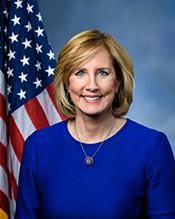
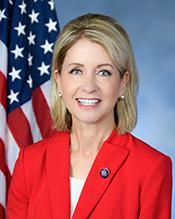
Sponsors and Cosponsors of HR 2561

Latest Bills
TRAPS Act
Bill HR 4936September 18, 2026
Apples to Apples Comparison Act of 2025
Bill HR 4093September 18, 2026
American Lending Fairness Act of 2026
Bill HR 7866September 18, 2026
Civil Investigative Demand Reform Act of 2025
Bill HR 1653September 18, 2026
American Reserve Modernization Act of 2026
Bill HR 8957September 18, 2026
Preventive Health Savings Act
Bill HR 4464September 18, 2026
PEARL Act
Bill HR 9327September 18, 2026
Medically Tailored Home-Delivered Meals Program Pilot Act
Bill HR 5439September 18, 2026
To designate the facility of the United States Postal Service located at 117 West Lovett Street in Charlotte, Michigan, as the "Francis C. Flaherty Post Office Building".
Bill HR 9570September 18, 2026
To designate the facility of the United States Postal Service located at 1019 Avenue H in Fort Madison, Iowa, as the "Martin L. Graber Post Office".
Bill HR 4707September 18, 2026