0
0
0
John R. Lewis Voting Rights Advancement Act of 2024
3/21/2024, 3:09 PM
Summary of Bill S 4
Bill 118 s 4, also known as the John R. Lewis Voting Rights Advancement Act of 2024, is a piece of legislation introduced in the US Congress with the aim of protecting and expanding voting rights for all Americans. The bill is named after the late civil rights leader John R. Lewis, who dedicated his life to fighting for equal voting rights for all citizens.
The main purpose of the John R. Lewis Voting Rights Advancement Act is to strengthen and restore key provisions of the Voting Rights Act of 1965, which was a landmark piece of legislation that aimed to eliminate discriminatory voting practices that disenfranchised minority voters. The bill seeks to address recent challenges to voting rights, such as voter suppression tactics and restrictive voting laws that disproportionately impact marginalized communities.
Some key provisions of the John R. Lewis Voting Rights Advancement Act include: 1. Restoring the preclearance requirement: The bill would reinstate the preclearance requirement, which was struck down by the Supreme Court in 2013. This requirement would require certain states and jurisdictions with a history of discriminatory voting practices to obtain federal approval before making any changes to their voting laws. 2. Expanding voter protections: The bill would expand protections for voters by prohibiting discriminatory practices such as voter ID laws, voter purges, and gerrymandering. It would also provide resources and support for states to improve access to voting, such as expanding early voting and implementing automatic voter registration. 3. Enhancing enforcement mechanisms: The bill would strengthen enforcement mechanisms to ensure that voting rights violations are swiftly addressed and remedied. This includes providing additional funding for the Department of Justice to investigate and prosecute cases of voter suppression. Overall, the John R. Lewis Voting Rights Advancement Act of 2024 aims to uphold the fundamental right to vote for all Americans and ensure that every citizen has equal access to the ballot box. The bill is currently being debated in Congress, with bipartisan support from lawmakers who recognize the importance of protecting and expanding voting rights in a democracy.
The main purpose of the John R. Lewis Voting Rights Advancement Act is to strengthen and restore key provisions of the Voting Rights Act of 1965, which was a landmark piece of legislation that aimed to eliminate discriminatory voting practices that disenfranchised minority voters. The bill seeks to address recent challenges to voting rights, such as voter suppression tactics and restrictive voting laws that disproportionately impact marginalized communities.
Some key provisions of the John R. Lewis Voting Rights Advancement Act include: 1. Restoring the preclearance requirement: The bill would reinstate the preclearance requirement, which was struck down by the Supreme Court in 2013. This requirement would require certain states and jurisdictions with a history of discriminatory voting practices to obtain federal approval before making any changes to their voting laws. 2. Expanding voter protections: The bill would expand protections for voters by prohibiting discriminatory practices such as voter ID laws, voter purges, and gerrymandering. It would also provide resources and support for states to improve access to voting, such as expanding early voting and implementing automatic voter registration. 3. Enhancing enforcement mechanisms: The bill would strengthen enforcement mechanisms to ensure that voting rights violations are swiftly addressed and remedied. This includes providing additional funding for the Department of Justice to investigate and prosecute cases of voter suppression. Overall, the John R. Lewis Voting Rights Advancement Act of 2024 aims to uphold the fundamental right to vote for all Americans and ensure that every citizen has equal access to the ballot box. The bill is currently being debated in Congress, with bipartisan support from lawmakers who recognize the importance of protecting and expanding voting rights in a democracy.
Read the Full Bill
Current Status of Bill S 4
Bill S 4 is currently in the status of Bill Introduced since February 29, 2024. Bill S 4 was introduced during Congress 118 and was introduced to the Senate on February 29, 2024. Bill S 4's most recent activity was Read twice and referred to the Committee on the Judiciary. (Sponsor introductory remarks on measure: CR S1079; text: CR S1079-1080) as of February 29, 2024
Bipartisan Support of Bill S 4
Total Number of Sponsors
1Democrat Sponsors
1Republican Sponsors
0Unaffiliated Sponsors
0Total Number of Cosponsors
98Democrat Cosponsors
92Republican Cosponsors
0Unaffiliated Cosponsors
6Policy Area and Potential Impact of Bill S 4
Primary Policy Focus
Government Operations and PoliticsAlternate Title(s) of Bill S 4
John R. Lewis Voting Rights Advancement Act of 2024
John R. Lewis Voting Rights Advancement Act of 2024
Election Worker and Polling Place Protection Act
A bill to amend the Voting Rights Act of 1965 to revise the criteria for determining which States and political subdivisions are subject to section 4 of the Act, and for other purposes.
A bill to amend the Voting Rights Act of 1965 to revise the criteria for determining which States and political subdivisions are subject to section 4 of the Act, and for other purposes.
Comments
Sponsors and Cosponsors of S 4
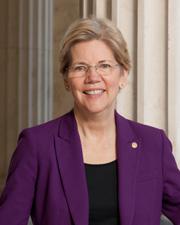


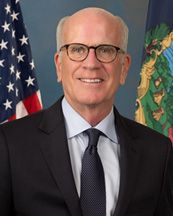
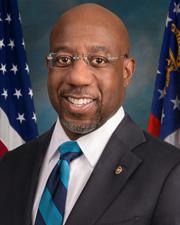
Latest Bills
TRAPS Act
Bill HR 4936September 18, 2026
Apples to Apples Comparison Act of 2025
Bill HR 4093September 18, 2026
American Lending Fairness Act of 2026
Bill HR 7866September 18, 2026
Civil Investigative Demand Reform Act of 2025
Bill HR 1653September 18, 2026
American Reserve Modernization Act of 2026
Bill HR 8957September 18, 2026
Preventive Health Savings Act
Bill HR 4464September 18, 2026
PEARL Act
Bill HR 9327September 18, 2026
Medically Tailored Home-Delivered Meals Program Pilot Act
Bill HR 5439September 18, 2026
To designate the facility of the United States Postal Service located at 117 West Lovett Street in Charlotte, Michigan, as the "Francis C. Flaherty Post Office Building".
Bill HR 9570September 18, 2026
To designate the facility of the United States Postal Service located at 1019 Avenue H in Fort Madison, Iowa, as the "Martin L. Graber Post Office".
Bill HR 4707September 18, 2026
A bill to protect election workers and polling places.
Bill S 3912April 5, 2024