0
0
0
Acre In, Acre Out Act
12/15/2023, 3:53 PM
Summary of Bill HR 172
Bill 118 hr 172, also known as the Acre In, Acre Out Act, is a piece of legislation currently being considered by the US Congress. The main purpose of this bill is to address the issue of land conservation and development in the United States.
The Acre In, Acre Out Act aims to promote the conservation of land by requiring that for every acre of federal land that is sold or transferred out of federal ownership, an equal amount of land must be acquired for conservation purposes. This means that if a certain amount of federal land is sold for development or other purposes, an equivalent amount of land must be set aside for conservation efforts.
The bill also includes provisions for the establishment of a fund to support the acquisition of land for conservation purposes. This fund would be used to purchase land that is deemed important for conservation, such as wildlife habitats, wetlands, or other environmentally sensitive areas. Overall, the Acre In, Acre Out Act is aimed at balancing the need for development and economic growth with the importance of preserving natural resources and protecting the environment. It seeks to ensure that as federal land is used for development, an equal amount of land is set aside for conservation, helping to maintain the ecological balance and protect important natural areas for future generations.
The Acre In, Acre Out Act aims to promote the conservation of land by requiring that for every acre of federal land that is sold or transferred out of federal ownership, an equal amount of land must be acquired for conservation purposes. This means that if a certain amount of federal land is sold for development or other purposes, an equivalent amount of land must be set aside for conservation efforts.
The bill also includes provisions for the establishment of a fund to support the acquisition of land for conservation purposes. This fund would be used to purchase land that is deemed important for conservation, such as wildlife habitats, wetlands, or other environmentally sensitive areas. Overall, the Acre In, Acre Out Act is aimed at balancing the need for development and economic growth with the importance of preserving natural resources and protecting the environment. It seeks to ensure that as federal land is used for development, an equal amount of land is set aside for conservation, helping to maintain the ecological balance and protect important natural areas for future generations.
Current Status of Bill HR 172
Bill HR 172 is currently in the status of Bill Introduced since January 9, 2023. Bill HR 172 was introduced during Congress 118 and was introduced to the House on January 9, 2023. Bill HR 172's most recent activity was Referred to the Subcommittee on Federal Lands. as of February 21, 2023
Bipartisan Support of Bill HR 172
Total Number of Sponsors
1Democrat Sponsors
0Republican Sponsors
1Unaffiliated Sponsors
0Total Number of Cosponsors
0Democrat Cosponsors
0Republican Cosponsors
0Unaffiliated Cosponsors
0Policy Area and Potential Impact of Bill HR 172
Primary Policy Focus
Public Lands and Natural ResourcesComments
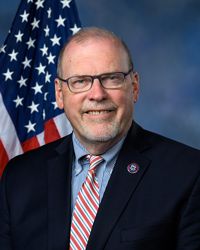
Sponsors and Cosponsors of HR 172
Latest Bills
TRAPS Act
Bill HR 4936September 18, 2026
Apples to Apples Comparison Act of 2025
Bill HR 4093September 18, 2026
American Lending Fairness Act of 2026
Bill HR 7866September 18, 2026
Civil Investigative Demand Reform Act of 2025
Bill HR 1653September 18, 2026
American Reserve Modernization Act of 2026
Bill HR 8957September 18, 2026
Preventive Health Savings Act
Bill HR 4464September 18, 2026
PEARL Act
Bill HR 9327September 18, 2026
Medically Tailored Home-Delivered Meals Program Pilot Act
Bill HR 5439September 18, 2026
To designate the facility of the United States Postal Service located at 117 West Lovett Street in Charlotte, Michigan, as the "Francis C. Flaherty Post Office Building".
Bill HR 9570September 18, 2026
To designate the facility of the United States Postal Service located at 1019 Avenue H in Fort Madison, Iowa, as the "Martin L. Graber Post Office".
Bill HR 4707September 18, 2026