0
0
0
To create mechanisms by which state law enforcement can coordinate with the federal government to detect and stop drones involved in unlawful activities, and for other purposes.
12/21/2024, 9:05 AM
Summary of Bill HR 10555
Bill 118 hr 10555, also known as the "State Law Enforcement Drone Coordination Act," aims to establish a framework for state law enforcement agencies to work together with the federal government in order to identify and prevent the use of drones in illegal activities. The bill seeks to address the growing concern over the misuse of drones for criminal purposes, such as smuggling contraband, conducting surveillance, or even carrying out terrorist attacks.
Under this legislation, state law enforcement agencies would be required to develop protocols and procedures for detecting and intercepting drones engaged in unlawful activities. This would involve coordinating with federal agencies, such as the Department of Homeland Security and the Federal Aviation Administration, to share information and resources in order to effectively combat the misuse of drones.
Additionally, the bill includes provisions for training state law enforcement officers on how to identify and respond to drone-related threats, as well as guidelines for the use of counter-drone technology. It also establishes a reporting mechanism for state agencies to provide information on drone incidents to the federal government. Overall, the State Law Enforcement Drone Coordination Act aims to enhance collaboration between state and federal authorities in order to better protect the public from the potential dangers posed by drones used for illegal purposes.
Under this legislation, state law enforcement agencies would be required to develop protocols and procedures for detecting and intercepting drones engaged in unlawful activities. This would involve coordinating with federal agencies, such as the Department of Homeland Security and the Federal Aviation Administration, to share information and resources in order to effectively combat the misuse of drones.
Additionally, the bill includes provisions for training state law enforcement officers on how to identify and respond to drone-related threats, as well as guidelines for the use of counter-drone technology. It also establishes a reporting mechanism for state agencies to provide information on drone incidents to the federal government. Overall, the State Law Enforcement Drone Coordination Act aims to enhance collaboration between state and federal authorities in order to better protect the public from the potential dangers posed by drones used for illegal purposes.
Current Status of Bill HR 10555
Bill HR 10555 is currently in the status of Bill Introduced since December 20, 2024. Bill HR 10555 was introduced during Congress 118 and was introduced to the House on December 20, 2024. Bill HR 10555's most recent activity was Referred to the Committee on the Judiciary, and in addition to the Committees on Transportation and Infrastructure, Homeland Security, and Armed Services, for a period to be subsequently determined by the Speaker, in each case for consideration of such provisions as fall within the jurisdiction of the committee concerned. as of December 20, 2024
Bipartisan Support of Bill HR 10555
Total Number of Sponsors
1Democrat Sponsors
0Republican Sponsors
1Unaffiliated Sponsors
0Total Number of Cosponsors
1Democrat Cosponsors
0Republican Cosponsors
1Unaffiliated Cosponsors
0Policy Area and Potential Impact of Bill HR 10555
Primary Policy Focus
Alternate Title(s) of Bill HR 10555
To create mechanisms by which state law enforcement can coordinate with the federal government to detect and stop drones involved in unlawful activities, and for other purposes.
To create mechanisms by which state law enforcement can coordinate with the federal government to detect and stop drones involved in unlawful activities, and for other purposes.
Comments
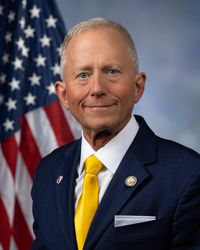
Sponsors and Cosponsors of HR 10555

Latest Bills
TRAPS Act
Bill HR 4936September 18, 2026
Apples to Apples Comparison Act of 2025
Bill HR 4093September 18, 2026
American Lending Fairness Act of 2026
Bill HR 7866September 18, 2026
Civil Investigative Demand Reform Act of 2025
Bill HR 1653September 18, 2026
American Reserve Modernization Act of 2026
Bill HR 8957September 18, 2026
Preventive Health Savings Act
Bill HR 4464September 18, 2026
PEARL Act
Bill HR 9327September 18, 2026
Medically Tailored Home-Delivered Meals Program Pilot Act
Bill HR 5439September 18, 2026
To designate the facility of the United States Postal Service located at 117 West Lovett Street in Charlotte, Michigan, as the "Francis C. Flaherty Post Office Building".
Bill HR 9570September 18, 2026
To designate the facility of the United States Postal Service located at 1019 Avenue H in Fort Madison, Iowa, as the "Martin L. Graber Post Office".
Bill HR 4707September 18, 2026