0
0
0
Residential Protest Prohibition Act of 2022
12/29/2022, 5:18 PM
Summary of Bill HR 8149
Bill 117 HR 8149, also known as the Residential Protest Prohibition Act of 2022, aims to address the issue of protests taking place in residential neighborhoods. The bill prohibits individuals from protesting within 300 feet of a residential property without the permission of the property owner.
The bill states that protests can still take place in public areas such as parks and sidewalks, but not in close proximity to residential homes. This is to protect the privacy and safety of residents who may feel threatened or harassed by protests happening right outside their homes.
Supporters of the bill argue that it is necessary to balance the right to protest with the rights of homeowners to feel safe and secure in their own homes. They believe that allowing protests in residential areas can lead to disturbances and potential violence. Opponents of the bill, however, argue that it infringes on the First Amendment right to freedom of speech and assembly. They believe that individuals should have the right to peacefully protest in any public space, including residential neighborhoods. Overall, the Residential Protest Prohibition Act of 2022 is a controversial piece of legislation that raises important questions about the balance between individual rights and public safety. It will be interesting to see how this bill progresses through Congress and what impact it may have on future protests in residential areas.
The bill states that protests can still take place in public areas such as parks and sidewalks, but not in close proximity to residential homes. This is to protect the privacy and safety of residents who may feel threatened or harassed by protests happening right outside their homes.
Supporters of the bill argue that it is necessary to balance the right to protest with the rights of homeowners to feel safe and secure in their own homes. They believe that allowing protests in residential areas can lead to disturbances and potential violence. Opponents of the bill, however, argue that it infringes on the First Amendment right to freedom of speech and assembly. They believe that individuals should have the right to peacefully protest in any public space, including residential neighborhoods. Overall, the Residential Protest Prohibition Act of 2022 is a controversial piece of legislation that raises important questions about the balance between individual rights and public safety. It will be interesting to see how this bill progresses through Congress and what impact it may have on future protests in residential areas.
Congressional Summary of HR 8149
Residential Protest Prohibition Act of 2022
This bill establishes a new criminal offense for picketing or protesting before or about the dwelling of any person with the intent to harass or disturb that person in his or her dwelling. A violation is subject to a fine and a prison term of not more than one year.
Read the Full Bill
Current Status of Bill HR 8149
Bill HR 8149 is currently in the status of Bill Introduced since June 17, 2022. Bill HR 8149 was introduced during Congress 117 and was introduced to the House on June 17, 2022. Bill HR 8149's most recent activity was Referred to the Subcommittee on Crime, Terrorism, and Homeland Security. as of November 1, 2022
Bipartisan Support of Bill HR 8149
Total Number of Sponsors
1Democrat Sponsors
0Republican Sponsors
1Unaffiliated Sponsors
0Total Number of Cosponsors
0Democrat Cosponsors
0Republican Cosponsors
0Unaffiliated Cosponsors
0Policy Area and Potential Impact of Bill HR 8149
Primary Policy Focus
Crime and Law EnforcementAlternate Title(s) of Bill HR 8149
Residential Protest Prohibition Act of 2022
Residential Protest Prohibition Act of 2022
To amend chapter 88 of title 18, United States Code, to prohibit pickets or protests before or about the dwelling of any person with the intent to harass or disturb that person in his or her dwelling, and for other purposes.
Comments
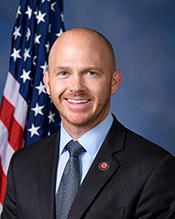
Sponsors and Cosponsors of HR 8149
Latest Bills
TRAPS Act
Bill HR 4936September 18, 2026
Apples to Apples Comparison Act of 2025
Bill HR 4093September 18, 2026
American Lending Fairness Act of 2026
Bill HR 7866September 18, 2026
Civil Investigative Demand Reform Act of 2025
Bill HR 1653September 18, 2026
American Reserve Modernization Act of 2026
Bill HR 8957September 18, 2026
Preventive Health Savings Act
Bill HR 4464September 18, 2026
PEARL Act
Bill HR 9327September 18, 2026
Medically Tailored Home-Delivered Meals Program Pilot Act
Bill HR 5439September 18, 2026
To designate the facility of the United States Postal Service located at 117 West Lovett Street in Charlotte, Michigan, as the "Francis C. Flaherty Post Office Building".
Bill HR 9570September 18, 2026
To designate the facility of the United States Postal Service located at 1019 Avenue H in Fort Madison, Iowa, as the "Martin L. Graber Post Office".
Bill HR 4707September 18, 2026