0
0

Conscience Protection Act of 2021

12/30/2022, 8:18 AM

Summary of Bill HR 6060

Bill 117 HR 6060, also known as the Conscience Protection Act of 2021, is a piece of legislation introduced in the US Congress. The main purpose of this bill is to protect the rights of healthcare providers who have moral or religious objections to certain medical procedures, such as abortion.

The bill aims to prevent discrimination against healthcare providers who refuse to participate in or provide services that go against their conscience. It prohibits the government from taking any adverse action against healthcare providers who choose not to participate in such procedures.

Additionally, the Conscience Protection Act of 2021 includes provisions that allow healthcare providers to file complaints with the Department of Health and Human Services if they believe their rights have been violated. The bill also requires the Department of Health and Human Services to investigate these complaints and take appropriate action if necessary. Overall, the Conscience Protection Act of 2021 seeks to ensure that healthcare providers are able to practice medicine in accordance with their moral or religious beliefs without fear of retribution. It is currently being debated in Congress and has garnered support from various religious and pro-life organizations.

Congressional Summary of HR 6060

Conscience Protection Act of 2021

This bill provides statutory authority for certain protections for health care providers that refuse to participate in abortions based on religious beliefs or other convictions. Health care providers include individual professionals, medical facilities, health insurance organizations, and social services providers that refer clients to health care services.

The federal government and entities that receive federal funding for health-related activities, including state and local governments, may not discriminate against a health care provider that refuses to be involved in, or provide coverage for, abortions. Currently, similar requirements apply to various related activities, including

  • certain employment or personnel decisions (the Church Amendments),
  • abortion services training (the Coats-Snowe Amendment),
  • qualified health plans offered through health insurance exchanges, and
  • annual appropriations bills for the Department of Health and Human Services (HHS) and other federal agencies (the Weldon Amendment).

The HHS Office for Civil Rights must investigate complaints of this kind of discrimination. Furthermore, HHS may terminate or reduce HHS funding for health-related activities if a person or entity fails to comply with nondiscrimination requirements.

Additionally, the Department of Justice or any entity adversely affected by such discrimination may bring a civil action to obtain appropriate relief. A plaintiff does not need to seek or exhaust administrative remedies before bringing the action. A plaintiff may also bring an action, including one for money damages, against a governmental entity. In many cases, principles of sovereign immunity shield states and some localities from these kinds of actions.
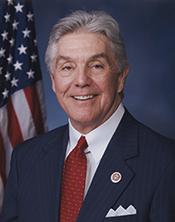
Current Status of Bill HR 6060

Bill HR 6060 is currently in the status of Bill Introduced since November 19, 2021. Bill HR 6060 was introduced during Congress 117 and was introduced to the House on November 19, 2021.  Bill HR 6060's most recent activity was Referred to the Subcommittee on Health. as of November 22, 2021

Bipartisan Support of Bill HR 6060

Total Number of Sponsors
1
Democrat Sponsors
0
Republican Sponsors
1
Unaffiliated Sponsors
0
Total Number of Cosponsors
212
Democrat Cosponsors
0
Republican Cosponsors
212
Unaffiliated Cosponsors
0

Policy Area and Potential Impact of Bill HR 6060

Primary Policy Focus

Health

Alternate Title(s) of Bill HR 6060

Conscience Protection Act of 2021
To amend the Public Health Service Act to prohibit governmental discrimination against health care providers that do not participate in abortion.

Comments

Latest Bills

To authorize the Secretary of Education, in collaboration with the Secretary of Health and Human Services, to establish an interagency advisory Commission on Advancing Restorative Justice in Elementary and Secondary Education, and for other purposes.
Bill HR 8360April 17, 2026
To amend the Higher Education Act of 1965 to remove all adverse credit history related to a loan from the credit history of a borrower who has rehabilitated the loan.
Bill HR 8361April 17, 2026
To reauthorize the YouthBuild program, and for other purposes.
Bill HR 8333April 17, 2026
To raise the Foreign Service mandatory retirement age by aligning it with the Social Security Full Retirement Age, and for other purposes.
Bill HR 8346April 17, 2026
To amend the FISA Amendments Act of 2008 to extend the authorities of title VII of the Foreign Intelligence Surveillance Act of 1978 through April 30, 2026, and for other purposes.
Bill HR 8322April 17, 2026
To amend title II of the Social Security Act to repeal the retirement earnings test, and for other purposes.
Bill HR 8344April 17, 2026
To amend section 133 of title 23, United States Code, to remove a certain State funding set-aside for transportation alternative programs, and for other purposes.
Bill HR 8349April 17, 2026
To amend title XI of the Social Security Act to require the Center for Medicare and Medicaid Innovation to test a model to reduce chronic diseases by using accountable produce is medicine.
Bill HR 8355April 17, 2026
To amend the Federal Food, Drug, and Cosmetic Act to enhance drug manufacturing amount information reporting, and for other purposes.
Bill HR 8339April 17, 2026
Supporting the designation of the week of April 11 through April 17, 2026, as "Black Maternal Health Week", founded by Black Mamas Matter Alliance, Inc. (BMMA), to bring national attention to the maternal and reproductive health crisis in the United States and the importance of reducing maternal mortality and morbidity among Black women and birthing people.
Bill HRES 1183April 17, 2026