0
0
0
Supplemental Security Income Equality Act
1/11/2023, 1:43 PM
Summary of Bill HR 537
Bill 117 HR 537, also known as the Supplemental Security Income Equality Act, aims to address disparities in the Supplemental Security Income (SSI) program for individuals with disabilities. The bill seeks to provide equal treatment for individuals with disabilities who are married or in a domestic partnership by eliminating the marriage penalty that currently exists within the SSI program.
Currently, individuals who receive SSI benefits face a reduction in their benefits if they are married or in a domestic partnership. This reduction is often referred to as the marriage penalty, as it penalizes individuals for getting married or entering into a domestic partnership. The Supplemental Security Income Equality Act seeks to eliminate this penalty by ensuring that individuals with disabilities are not financially penalized for getting married or entering into a domestic partnership.
The bill also aims to update the eligibility criteria for SSI benefits to better reflect the needs of individuals with disabilities. This includes adjusting the income and resource limits for individuals receiving SSI benefits, as well as ensuring that individuals with disabilities have access to the support they need to live independently and participate fully in society. Overall, the Supplemental Security Income Equality Act seeks to promote equality and fairness within the SSI program for individuals with disabilities. By eliminating the marriage penalty and updating the eligibility criteria for SSI benefits, the bill aims to ensure that individuals with disabilities have the support they need to live full and independent lives.
Currently, individuals who receive SSI benefits face a reduction in their benefits if they are married or in a domestic partnership. This reduction is often referred to as the marriage penalty, as it penalizes individuals for getting married or entering into a domestic partnership. The Supplemental Security Income Equality Act seeks to eliminate this penalty by ensuring that individuals with disabilities are not financially penalized for getting married or entering into a domestic partnership.
The bill also aims to update the eligibility criteria for SSI benefits to better reflect the needs of individuals with disabilities. This includes adjusting the income and resource limits for individuals receiving SSI benefits, as well as ensuring that individuals with disabilities have access to the support they need to live independently and participate fully in society. Overall, the Supplemental Security Income Equality Act seeks to promote equality and fairness within the SSI program for individuals with disabilities. By eliminating the marriage penalty and updating the eligibility criteria for SSI benefits, the bill aims to ensure that individuals with disabilities have the support they need to live full and independent lives.
Congressional Summary of HR 537
Supplemental Security Income Equality Act
This bill extends the Supplemental Security Income (SSI) program to Puerto Rico, the Virgin Islands, and Guam. This is a federal program designed to help aged, blind, and disabled individuals with limited income and resources meet basic needs. When Congress created the SSI program in 1972, it excluded these territories.
The Social Security Administration may waive or modify statutory requirements relating to the provision of benefits as necessary to adapt the SSI program to each territory.
This bill also eliminates a limit on payments from the Temporary Assistance for Needy Families (TANF) program and other Department of Health and Human Services programs to the territories.
Read the Full Bill
Current Status of Bill HR 537
Bill HR 537 is currently in the status of Bill Introduced since January 28, 2021. Bill HR 537 was introduced during Congress 117 and was introduced to the House on January 28, 2021. Bill HR 537's most recent activity was Referred to the Subcommittee on Social Security. as of January 28, 2021
Bipartisan Support of Bill HR 537
Total Number of Sponsors
1Democrat Sponsors
0Republican Sponsors
1Unaffiliated Sponsors
0Total Number of Cosponsors
12Democrat Cosponsors
10Republican Cosponsors
2Unaffiliated Cosponsors
0Policy Area and Potential Impact of Bill HR 537
Primary Policy Focus
Social WelfarePotential Impact Areas
- Administrative remedies
- American Samoa
- Caribbean area
- Guam
- Poverty and welfare assistance
- Puerto Rico
- Social Security Administration
- U.S. territories and protectorates
- Virgin Islands
Alternate Title(s) of Bill HR 537
Supplemental Security Income Equality Act
To extend the supplemental security income program to Puerto Rico, the United States Virgin Islands, Guam, and American Samoa, and for other purposes.
Supplemental Security Income Equality Act
Comments
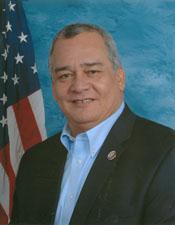
Sponsors and Cosponsors of HR 537




Latest Bills
TRAPS Act
Bill HR 4936September 18, 2026
Apples to Apples Comparison Act of 2025
Bill HR 4093September 18, 2026
American Lending Fairness Act of 2026
Bill HR 7866September 18, 2026
Civil Investigative Demand Reform Act of 2025
Bill HR 1653September 18, 2026
American Reserve Modernization Act of 2026
Bill HR 8957September 18, 2026
Preventive Health Savings Act
Bill HR 4464September 18, 2026
PEARL Act
Bill HR 9327September 18, 2026
Medically Tailored Home-Delivered Meals Program Pilot Act
Bill HR 5439September 18, 2026
To designate the facility of the United States Postal Service located at 117 West Lovett Street in Charlotte, Michigan, as the "Francis C. Flaherty Post Office Building".
Bill HR 9570September 18, 2026
To designate the facility of the United States Postal Service located at 1019 Avenue H in Fort Madison, Iowa, as the "Martin L. Graber Post Office".
Bill HR 4707September 18, 2026
Health Equity and Accountability Act of 2022
Bill S 4486December 29, 2022
Inflation Reduction Act of 2022
Bill HR 5376September 5, 2023
Guam Supplemental Security Income Equality Act
Bill HR 157January 11, 2023