0
0

Requiring Education Providers to Observe Requirements or Trigger Fines Act

12/31/2022, 4:58 AM

Summary of Bill HR 4264

Bill 117 HR 4264, also known as the Requiring Education Providers to Observe Requirements or Trigger Fines Act, is a piece of legislation currently being considered by the US Congress. The main purpose of this bill is to ensure that education providers, such as schools and universities, comply with certain requirements or face fines.

The bill outlines specific requirements that education providers must adhere to, such as providing a safe and inclusive learning environment, offering a quality education to all students, and following all relevant laws and regulations. If an education provider fails to meet these requirements, they may be subject to fines imposed by the government.

Supporters of the bill argue that it is necessary to hold education providers accountable for their actions and ensure that all students receive a high-quality education. They believe that imposing fines will incentivize education providers to comply with the requirements outlined in the bill. Opponents of the bill, however, argue that it could place an undue burden on education providers, particularly those that are already struggling financially. They also raise concerns about the potential for fines to disproportionately impact certain schools or students. Overall, the Requiring Education Providers to Observe Requirements or Trigger Fines Act is a controversial piece of legislation that aims to improve accountability in the education system. Its fate will ultimately be decided by the US Congress in the coming months.

Congressional Summary of HR 4264

Requiring Education Providers to Observe Requirements or Trigger Fines Act or the REPORT Fines Act

This bill modifies the disclosure threshold regarding gifts or contracts from a foreign source that institutions of higher education (IHEs) must report to the Department of Education (ED). The bill also establishes new penalties for failure to report.

Under current law, an IHE is required to disclose to ED a gift or contract that is from a foreign source and is valued at $250,000 or more, considered alone or in combination with all other gifts from or contracts with that foreign source within a calendar year. The bill instead requires the IHE to disclose such a gift or contract that is valued at $50,000 or more within a calendar year.

In addition, the bill establishes new penalties for IHEs that fail to report to ED. These penalties include written warnings, civil penalties, and ineligibility for federal research funds. Further, the bill establishes accelerated penalties for IHEs that receive funding from certain countries (e.g., China or Russia).
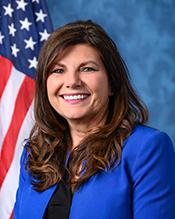
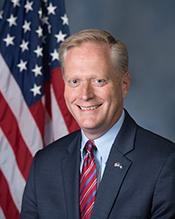
Current Status of Bill HR 4264

Bill HR 4264 is currently in the status of Bill Introduced since June 30, 2021. Bill HR 4264 was introduced during Congress 117 and was introduced to the House on June 30, 2021.  Bill HR 4264's most recent activity was Referred to the House Committee on Education and Labor. as of June 30, 2021

Bipartisan Support of Bill HR 4264

Total Number of Sponsors
1
Democrat Sponsors
0
Republican Sponsors
1
Unaffiliated Sponsors
0
Total Number of Cosponsors
2
Democrat Cosponsors
0
Republican Cosponsors
2
Unaffiliated Cosponsors
0

Policy Area and Potential Impact of Bill HR 4264

Primary Policy Focus

Education

Potential Impact Areas

- Asia
- Caribbean area
- Charitable contributions
- China
- Civil actions and liability
- Contracts and agency
- Cuba
- Diplomacy, foreign officials, Americans abroad
- Education programs funding
- Europe
- Government information and archives
- Higher education
- Hong Kong
- Iran
- Latin America
- Middle East
- North Korea
- Research administration and funding
- Russia
- Venezuela

Alternate Title(s) of Bill HR 4264

To amend section 117 of the Higher Education Act of 1965 to clarify the enforcement of such section, and for other purposes.
Requiring Education Providers to Observe Requirements or Trigger Fines Act
REPORT Fines Act

Comments

Latest Bills

To authorize the Secretary of Education, in collaboration with the Secretary of Health and Human Services, to establish an interagency advisory Commission on Advancing Restorative Justice in Elementary and Secondary Education, and for other purposes.
Bill HR 8360April 17, 2026
To amend the Higher Education Act of 1965 to remove all adverse credit history related to a loan from the credit history of a borrower who has rehabilitated the loan.
Bill HR 8361April 17, 2026
To reauthorize the YouthBuild program, and for other purposes.
Bill HR 8333April 17, 2026
To raise the Foreign Service mandatory retirement age by aligning it with the Social Security Full Retirement Age, and for other purposes.
Bill HR 8346April 17, 2026
To amend the FISA Amendments Act of 2008 to extend the authorities of title VII of the Foreign Intelligence Surveillance Act of 1978 through April 30, 2026, and for other purposes.
Bill HR 8322April 17, 2026
To amend title II of the Social Security Act to repeal the retirement earnings test, and for other purposes.
Bill HR 8344April 17, 2026
To amend section 133 of title 23, United States Code, to remove a certain State funding set-aside for transportation alternative programs, and for other purposes.
Bill HR 8349April 17, 2026
To amend title XI of the Social Security Act to require the Center for Medicare and Medicaid Innovation to test a model to reduce chronic diseases by using accountable produce is medicine.
Bill HR 8355April 17, 2026
To amend the Federal Food, Drug, and Cosmetic Act to enhance drug manufacturing amount information reporting, and for other purposes.
Bill HR 8339April 17, 2026
Supporting the designation of the week of April 11 through April 17, 2026, as "Black Maternal Health Week", founded by Black Mamas Matter Alliance, Inc. (BMMA), to bring national attention to the maternal and reproductive health crisis in the United States and the importance of reducing maternal mortality and morbidity among Black women and birthing people.
Bill HRES 1183April 17, 2026