0
0
0
Bureau of Consumer Financial Protection Examination and Reporting Threshold Act of 2017
4/7/2025, 3:21 PM
Summary of Bill HR 3072
Bill 115 hr 3072, also known as the Bureau of Consumer Financial Protection Examination and Reporting Threshold Act of 2017, aims to amend the Consumer Financial Protection Act of 2010 to increase the threshold at which the Bureau of Consumer Financial Protection must examine depository institutions and credit unions.
Currently, the threshold for mandatory examination by the Bureau is set at $10 billion in total assets. This bill proposes to raise that threshold to $50 billion, meaning that depository institutions and credit unions with assets below $50 billion would no longer be subject to mandatory examination by the Bureau.
Proponents of the bill argue that raising the threshold would reduce regulatory burden on smaller financial institutions, allowing them to allocate resources more efficiently and better serve their customers. They also argue that it would enable the Bureau to focus its resources on larger institutions that pose a greater risk to consumers. Opponents of the bill, however, express concerns that raising the threshold could weaken consumer protection measures and potentially leave smaller institutions vulnerable to predatory practices. They argue that the Bureau should continue to examine all financial institutions, regardless of size, to ensure that consumers are adequately protected. Overall, the Bureau of Consumer Financial Protection Examination and Reporting Threshold Act of 2017 is a contentious piece of legislation that raises important questions about the balance between regulatory oversight and the needs of smaller financial institutions. It will be interesting to see how this bill progresses through Congress and what impact it may have on the financial industry and consumers.
Currently, the threshold for mandatory examination by the Bureau is set at $10 billion in total assets. This bill proposes to raise that threshold to $50 billion, meaning that depository institutions and credit unions with assets below $50 billion would no longer be subject to mandatory examination by the Bureau.
Proponents of the bill argue that raising the threshold would reduce regulatory burden on smaller financial institutions, allowing them to allocate resources more efficiently and better serve their customers. They also argue that it would enable the Bureau to focus its resources on larger institutions that pose a greater risk to consumers. Opponents of the bill, however, express concerns that raising the threshold could weaken consumer protection measures and potentially leave smaller institutions vulnerable to predatory practices. They argue that the Bureau should continue to examine all financial institutions, regardless of size, to ensure that consumers are adequately protected. Overall, the Bureau of Consumer Financial Protection Examination and Reporting Threshold Act of 2017 is a contentious piece of legislation that raises important questions about the balance between regulatory oversight and the needs of smaller financial institutions. It will be interesting to see how this bill progresses through Congress and what impact it may have on the financial industry and consumers.
Current Status of Bill HR 3072
Bill HR 3072 is currently in the status of Bill Introduced since June 27, 2017. Bill HR 3072 was introduced during Congress 115 and was introduced to the House on June 27, 2017. Bill HR 3072's most recent activity was Placed on the Union Calendar, Calendar No. 311. as of November 21, 2017
Bipartisan Support of Bill HR 3072
Total Number of Sponsors
1Democrat Sponsors
1Republican Sponsors
0Unaffiliated Sponsors
0Total Number of Cosponsors
0Democrat Cosponsors
0Republican Cosponsors
0Unaffiliated Cosponsors
0Policy Area and Potential Impact of Bill HR 3072
Primary Policy Focus
Finance and Financial SectorComments
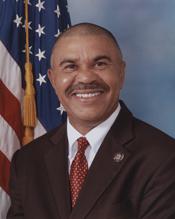
Sponsors and Cosponsors of HR 3072
Latest Bills
TRAPS Act
Bill HR 4936September 18, 2026
Apples to Apples Comparison Act of 2025
Bill HR 4093September 18, 2026
American Lending Fairness Act of 2026
Bill HR 7866September 18, 2026
Civil Investigative Demand Reform Act of 2025
Bill HR 1653September 18, 2026
American Reserve Modernization Act of 2026
Bill HR 8957September 18, 2026
Preventive Health Savings Act
Bill HR 4464September 18, 2026
PEARL Act
Bill HR 9327September 18, 2026
Medically Tailored Home-Delivered Meals Program Pilot Act
Bill HR 5439September 18, 2026
To designate the facility of the United States Postal Service located at 117 West Lovett Street in Charlotte, Michigan, as the "Francis C. Flaherty Post Office Building".
Bill HR 9570September 18, 2026
To designate the facility of the United States Postal Service located at 1019 Avenue H in Fort Madison, Iowa, as the "Martin L. Graber Post Office".
Bill HR 4707September 18, 2026